Archive for Defense

Yankees Indians Baseball

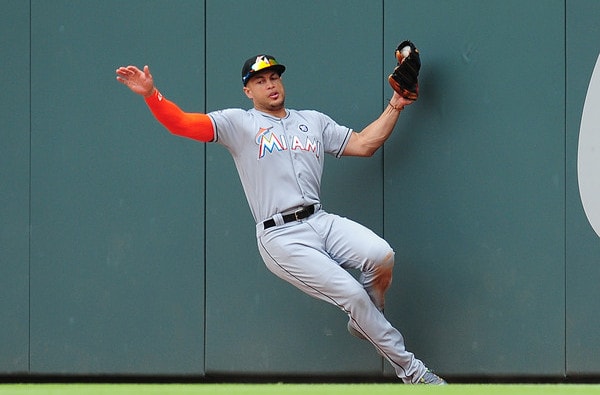
When Mariano Rivera and the Yankees sealed the deal on their 5-2 victory over the Indians last night, it marked the 18th game in a row in which the Yankees had not committed an error. Over that span of games, the Yankees have gone 14-4, and the team seems to be living proof of the adage “defense wins games.”

But on its face, this errorless streak is a bit deceptive it doesn’t really tell us very much about how the Yankees have been doing in the field. It does tell us that the Yankees have been sure-handed and that the team’s pitchers can trust the other eight men on the field. It does tell us that the Yankees are fielding the balls they can get to cleanly, but it does not tell us if the Yankees are getting to more balls and thus are turning more potential hits into outs.

For that, we have to move beyond the limited statistic of errors and look at some of the new defensive metrics that assess range and defensive efficiency. Over the weekend, long-time RAB reader Jamal G. commented on the defense: “I think the huge defensive statistic that people should be paying attention to is the Yankees’ being 5th in the AL (12th in MLB) in Team Defensive Efficiency with a .697%. I expected the defense to be better, but in the 18-20 range; this is surprisingly awesome.”

I had recruited Jamal to write a longer guest column for us, but then the new Statistician Magician beat us to the punch. In his piece, he analyzes the various parts that make up the Yankee defensive whole and concludes that, while so far there are no stand-outs, the team is much improved over recent years. He concludes:

The team’s overall defense is close to average. But that is much improved based on what we all saw last season. And because of this, they don’t have a real flaw: above-average pitching, once it comes around completely; a very good offense when healthy; and now a decent enough defense too.

If they keep up the glove-work, which they should, it will be a great step in the right direction for Cashman and the rest of the organization. Because Cashman seeing their success coincide with an improvement on defense, will let him truly understand what he has been missing for some time now.

…Because defense matters.

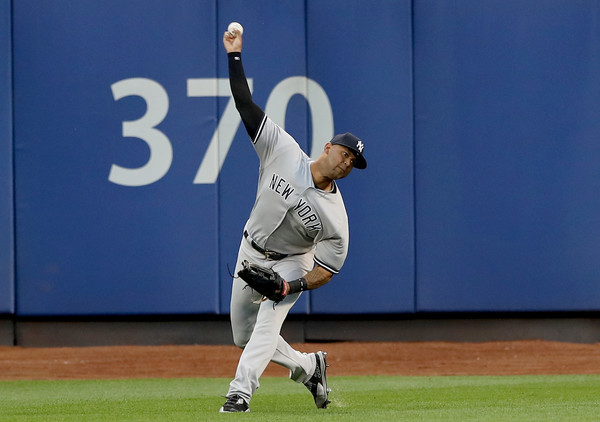
With Derek Jeter’s new-found range, Robinson Cano’s resurgence and some excellent outfield defense after a few years of Matsui-Damon-Abreu, the Yankees are turning balls that once were hit into outs. Their starting pitchers can go deeper into games, and the team enjoys fewer opposing base runners.

Right now, it’s all clicking for the Yanks, and their defense is a large part of it. The error-less streak looks good on paper and makes for some nice headlines, but it tells only part of the story. As much as they are winning with hitting and winning with pitching, the Yankees are starting to win with fielding too, and as Flying Joba Chamberlain showed last night, it looks good.

Photo by Mark Duncan for the Associated Press.

Categories : Defense
Comments (115)

Defensive quantification, the final frontier. Since its introduction to mainstream culture, baseball has been a sport obsessed with statistics. Yet one aspect of the game which has flustered analysts for years is defense. We’ve seen some breakthroughs over the past few years, with Zone Rating, Ultimate Zone Rating, John Dewan’s plus minus, and Dave Pinto’s PMR, but none of them provide us with the concrete information we get from batting and pitching stats. All that means is that we should be looking for other ways to accurately evaluate defensive and its effect on the outcome of games.

On Wednesday, Rob Neyer explored the first-place Texas Rangers and their improved pitching staff. A team which has ranked no better than 12 out of 14 AL teams the past four years is currently sixth best in the young season. They’ve combined that fortune, which comes mostly on the effort of Kevin Millwood and his 2.92 ERA, with 191 runs scored, two behind Boston for second most in the AL. While it might sound funny to hear “first place Texas Rangers,” it’s not so odd to hear that the team with the sixth-best pitching and third-best offense leads its division.

At FanGraphs today, Dave Cameron flips the argument a bit and gives the Rangers defense a lot of credit for the team’s pitching success. His evidence: the team’s FIP — that is, Fielding Independent Pitching, defined below — is actually worse this year, at 5.17, than it was all of last year, 4.83. This would indicate that the defense is doing quite the job in converting balls in play into outs.

We can see this from an anecdotal and a statistical standpoint. The Rangers rearranged their infield over the winter in order to eradicate a few of their weaknesses. For instance, the team featured a revolving door at third base, none of whom were any good at the position, as evidenced by their -26.7 collective UZR. At shortstop, Michael Young featured a -5.4 UZR. So the Rangers slid Young over to third, and though it hasn’t gone quite as planned there’s still time for him to make the adjustment. They replaced him with defensive whiz Elvis Andrus, who is into the positive UZR rankings already. They moved Chris Davis over to first, where his bat will play just fine and he’s less of a liability than he was at third. Even Ian Kinsler is playing better this year, projecting to a 14.4 UZR/150 after negative values in his earlier years.

The question, of course, is how much of this is related to a small sample size and how much is for real. We can’t tell yet if Kinsler is getting extremely lucky or if having Andrus up the middle is giving him a boost. We don’t know if Michael Young is bad at third — and that comes in two senses. First, is he really bad, in the sense of, is UZR accurately depicting his ability? Second, is he just bad, or is this just a transition after having played shortstop from 2004 through 2008? Perhaps the biggest question here is, how does this relate to the Yankees?

One area in which the Yanks could have really done something to improve this off-season was on defense. Signing Mark Teixeira improved the glovework at first, but what about the rest of the infield? In order to see an improvement, they’d have to see Robinson Cano return to 2007 form, Jeter maintain what he did in 2008, and for A-Rod to continue being league average. Is it working? Well, the team has a 5.18 team FIP against a 5.64 team ERA, so it doesn’t look like it. That’s not the final word, of course — comparing FIP to ERA is just a tool to aid in analysis. But, with this one readily-available tool, it doesn’t appear the Yanks defense is doing much to bail out the pitchers.

It’s tough to make any kind of far-reaching judgments when the season is barely a month over. However, in the early going it looks like the Yanks are having problems all around: with their pitching, with their defense, and with their hitting, particularly with runners in scoring position. That’s quite a stack of problems for a team to overcome. The saving grace is that the Yankees have the talent to do it. They’re currently 10th in the AL in UZR, though they’re off of 9th place by a decent margin. Still, with even a modest improvement from here on out — say, league average — they can make the necessary adjustments and play this season like we’d imagined it in March.

Categories : Defense
Comments (33)

We’ll continue the Fielding Bible series today with a bit on Derek Jeter’s double play partner, Robinson Cano. The 26-year-old has been a strange case during his tenure with the Yanks. Sometimes he looks like a Top 5 defender at second. Others it appears he lacks the range to play the position. So what gives? Is Cano a guy the Yanks can count on in the future to hold down his position, or is he going to become a liability who needs to switch positions before age 30?

According to John Dewan’s plus/minus system, Cano was putrid in 2008. He had a -13 rating, which placed him third to last in the league, ahead of only Felipe Lopez and Luis Castillo. Even Jeff Kent finished ahead of him. It’s tough to argue with a poor rating for Cano, since we could all see his defensive deficiencies in 2008. Was he really third worst in the entire league, though?

UZR doesn’t have the same result, but certainly a similar one. It pegs Cano at a -7.2 UZR, second worst among qualifiers and beating out only Kelly Johnson of the Braves. Castillo and Lopez do not show up on the UZR list. So yes, Cano had a pretty horrible season in the field by all accounts. That’s not the fascinating part, though.

In 2007, Robinson Cano saved the most runs in the league among second baseman, according to plus/minus. That’s 13 runs saved with his glove, plus another 9 saved on the double play ball. In 2006, Cano was quite average by plus/minus standards, registering -3 runs saved. UZR backs that up, placing Cano third in the league in 2007, behind only Chase Utley and Brandon Phillips — and ahead of reputed defensive whiz Mark Ellis.

Given the fluctuations in Cano’s defensive output, it’s tough to make a determination here. He was average in 06, stellar in 07, and horrible in 08. Chances are he’s really just average, had a career defensive year in 2007, and took his poor start with the bat out to the field with him in 2008. There’s no way to prove that, but it makes at least a degree of intuitive sense.

Maybe, just maybe though Cano is actually an excellent fielder and just needs to keep his focus out there. While his 2008 plus/minus was the pits, he still managed to make a number of what Bill james calls Good Fielding Plays. This is the opposite of Defensive Misplays, in that it gives a fielder extra credit for fielding a ball which seemed likely to be a hit. Surprisingly, Cano led the league in Good Fielding Plays with 69 (dude). While he ranked fourth in the league for Defensive Misplays with 42, he still had enough Good Fielding Plays to rank him fourth in the league in terms of GFP minus DM.

(Also note that Cano fielded more balls than most second basemen in the league in 2008, which inflates his DM and GFP numbers just a bit. In terms of Defensive Misplays plus Errors per touch, Cano was not in the bottom 10 in the league.)

One last statistical note before jumping into the scouting report. Dave Studenmund of The Hardball Times adds Revised Zone Ratings to the mix. For those unfamiliar with ZR, it divides the field up into slices, or zones. When balls are hit to a certain zone a particular fielder is assigned responsibility. In 2008 Cano had a .809 ZR, which put him in the bottom third of the league. However, he made 30 plays out of his zone, which looks to be about average, maybe slightly above. In 2007 he had a .833 ZR, which was right in the middle, but made 53 plays out of his zone. Only Dan Uggla and Aaron Hill fielded more out of their zone that year.

So was Cano’s top-notch defense in 2007 attributable to the balls he fielded out of his zone? Given his positive rankings when ranging to his left and to his right in 2007 and their negative values in 2008, that might be the case. It’s always a dicey proposition to combine defensive stats, but given what each system tells us, this might be the case. The evidence available suggests Cano has excellent range, so there’s plenty to be hopeful about. We can only hope that he acted immaturely last year by taking his offensive woes out to the field with him, and that he’ll learn from that mistake in 2009.

Now onto what the scouts say about Cano:

Cano took a step back defensively in 2008. Granted, he made some flashy plays on the run, going side to side or charging softly hit balls. He also possesses an above-average arm and features a nifty sidearm flick that helps on the double play. With all his flashes of brilliance, though, Cano still had a hard time fielding simple groundballs. On balls not hit particularly hard, Cano stabs too quickly at the ball or botches the play entirely. He also can seem lackadaisical. As time passes, 2007 is looking more like the exception than the rule.

Thankfully, the ability to field routine grounders is a skill which can be learned and honed. The ability to range to one’s left or right cannot, or cannot so easily. Perhaps Cano should learn something from his double play partner, who we learned is quite adept at avoiding mistakes. If Cano can do that, his range should make him one of the top defensive second basemen in the league.

Previously: Derek Jeter’s defense revisited.

You can get The Fielding Bible–Volume II from Amazon.com for $16.29. That’s our Amazon Associate code, so if you buy the book from that link you’ll kick us a few pennies.

Categories : Defense
Comments (47)

Outfield Defense

That graph comes courtesy of Dan Turkenkopf at Beyond the Box Score. Dan took the vector data from Dave Pinto’s database and plotted it to show where each of the Yanks’ starting outfielders excels defensively. Basically what you’re seeing is how good each player is on balls hit to a specific “zone,” with green being good and red being bad. The center fielder is shown above the corner guys just so you can see the overlap, it doesn’t mean that balls hit to corners will go undefended or anything like that. And also don’t worry about the background, the New Stadium will have the same dimensions as the old joint.

The very first thing I noticed was how bad Nady is on balls hit right at him, basically about five outs worse than expected. He’s even weak to his immediate right and left, which tells me that he’s just not very instinctive out there, and is at his best defensively when it’s obvious off the bat that he’ll need some hustle to get to the ball. You know what would be cool? If Mr. Turkenkopf put one of these together with Swisher in right instead of the X-man. (nudge nudge)

Damon is the opposite of Nady, eating up everything hit close to him, which is what you’d expect from a veteran Major League outfielder. He’s also stronger going to his right, which probably has something to do with him not having to reach across his body with his glove to field balls on that side. Gardner’s very strong out there, making plays on everything hit even remotely close to him. He shows the same pattern of struggling to get to balls that would require him to reach across his body with his glove, so my theory might hold a little water. Of course the small sample size police are in full force with Gardy.

Judging from the graph, it looks like the biggest problem areas are the gaps (expected), specifically the left-center field gap. And, you know, the whole Nady in right field thing. Joe and I have mentioned on the podcast several times that the hardest ball to field is the one hit right at you, but it looks like Nady is the only one in the Yanks outfield with this issue.

This is some really interesting stuff. What do you guys think?

Categories : Defense
Comments (61)

A few weeks ago the folks at ACTA Sports were kind enough to send along a copy of The Fielding Bible Volume II, John Dewan’s study on defensive metrics. Instead of reviewing the entire 400-page tome in one shot, I thought I’d address a number of issues throughout the week. We’ll start off with a topic which has been beaten into the ground over the past few years: Derek Jeter’s defense. As it turns out, his Gold Gloves might be justified.

This isn’t to say that Jeter’s range is any better than we’ve come to understand. He still has trouble ranging to his left, and that’s probably not going to improve. Yet he’s not a complete black hole out there. As it turns out, Jeter ranked best in the majors last year in Defensive Misplays, a visual metric developed by Bill James which attempts to succeed where errors fail in determining poor defensive plays. Says James:

A defensive misplay is a very specific observation of a very narrowly defined event, created in such a way as to keep the scorer’s use of judgment to an absolute minimum.

An error is based on what “ought” to happen in the mind of an official scorer. A-Rod should have fielded that cleanly; Robinson Cano should have made a better throw to first. James attempts to strip the subjective observation of the scorer and create a defined set of circumstances which will determine a defensive misplay. There are 54 different types of defensive misplays. Here’s his example:

Failing to anticipate the wall — Outfielder goes to the outfield wall, allowing a ball to bounce over his head back toward the infield, allowing a runner or runners to take bases which they might not have been able to take had the fielder turned and played the ball off the wall.

The scorer has to ask himself only two questions:

1) Did the outfielder go to the wall in an effort to catch the ball, and
2) Did the ball bounce over his head back toward the infield?

The scorer does not ask himself “Did the fielder have a real chance to catch the ball?” or “Should the fielder have chased the ball to the wall in that situation? or “Should an ordinary fielder have known that he could not catch the ball at the wall?” or anything like that. It’s two simple questions: Did he chase the ball to the wall, and did the ball bounce over his head back toward the infield?

While James attempts to separate subjective judgment from objective observation, he’s not always successful in The Fielding Bible. I’ll agree with Mitchel Lichtman’s critique: “However, as you read more about his Defensive Misplays (DM’s), it becomes clear that many of them are very subjective, or at least not as objective as he claims DM’s are in general.” Still, it tries to add more context to the idea of an error, beyond the official scorer determining that a player messed up.

(Oh, and you’ll never guess who led the league in the above-cited defensive misplay. Yes, it was Bobby Abreu, in a tie with — wait for it — Nate McLouth.)

Jeter’s strength, according to James’s system, is his ability to cleanly field balls he reaches. He led all shortstops last year with just 17 defensive misplays in 1,259 innings at short. Even when you count errors — which James claims were not counted in Defensive Misplays, so there’s no doubling up — Jeter comes out as the best shortstop in the majors.

This puts Jeter’s Gold Gloves in a bit better context. After all, it’s easier to see plays that were made than those that weren’t. It might not be easy for an observer to see all the balls Jeter doesn’t get to. Routine grounder through the hole for a single, one might think. That’s an easy observation to make, since it’s difficult to determine whether Jeter should have gotten to the ball or, even more difficultly, if one of Jeter’s peers would have cleanly fielded the grounder. Because he’s so good on the balls he does get to, that’s translated into playing good defense, hence the Gold Gloves.

When it comes to range, we know that Jeter doesn’t get much respect. If you check out his UZR you’ll see that since 2003 he’s ranged from slightly below average to freaking atrocious (namely 2005 and 2007). Last year he was just below average by that metric. Since this is a Fielding Bible review, we’ll also look at Dewan’s plus/minus system. That one’s a bit harsher on Jeter, rating him a -9 (-8 for fielding, -1 for his double play turning). That puts him fourth lowest among qualifying shortstops, besting only Yuniesky Betancourt (another guy who reputedly plays good D), Jeff Keppinger, and David Eckstein. During the three years from 2006 through 2008, Jeter ranks dead last at -50 — and it’s not even close.

The difference between the two systems is something we should certainly explore further. While Dewan had Jeter in the cellar in terms of defensive range, UZR was a bit kinder in 2008, ranking him 11th in the majors, ahead of Jose Reyes. More notably, UZR has Jeter ahead of Christian Guzman, who ranked fifth in Dewan’s plus/minus system. Clearly, there are flaws in defensive metrics. Geoff Baker, beat writer for The Seattle Times, has a comprehensive and intelligent look at defensive metrics. I highly recommend the read.

Does Jeter’s ability to avoid misplays compensate for his lack of range? It’s tough to say, especially when we’re working with inherently flawed statistics. I will agree with Steve Lombardi’s conclusion: “In a nutshell, it’s his ability to avoid “Defensive Misplays” that has enabled Derek Jeter to win Gold Glove awards in the past. And, it’s probably the same reason why the Yankees haven’t moved him off shortstop yet.” That and ego, of course.

We’ll close this out with a scouting take on Jeter, also from The Fielding Bible, just to even out all this statistical talk:

Then there is the signature Jeter play, when he fields a backhander in the hole and makes his patented jump-throw. Jeter still excels at this play, but it disguises the fact that he does it because he lacks the arm strength to plant his feet and throw. His arm also causes him to play more shallow than other shortstops, cutting down on his range.

The last comment about playing shallow makes plenty of sense. Certainly, playing shallow would make it tough for Jeter to get to those up the middle balls. Regarding the first observation about the jump-throw, it might sound intuitively incorrect. You can’t make as strong a throw while you’re in the air, right? No, you can’t, but you can also get rid of it quicker. What Dewan means here is that Jeter needs to do the jump-throw, because it would take him additional time to stop, plant, and make a strong throw. Because his arm isn’t as strong, he needs a quick release. It’s along the lines of Johnny Damon’s arm not costing the Yanks any runs — a topic we’ll visit later in the week.

You can get The Fielding Bible–Volume II from Amazon.com for $16.29. That’s our Amazon Associate code, so if you buy the book from that link you’ll kick us a few pennies.

Categories : Defense
Comments (72)
Jan
22

Check out those guns

Posted by: Benjamin Kabak | Comments (73)

Over at The Hardball Times, John Walsh analyzed the outfield arms across baseball. He uses a rigorous methodology which you can read about at THT to come up with a metric that “represent[s] the number of runs that an average fielder would save playing half his games in [his team's home] park.” The numbers for the 2008 Yanks were not pretty. Bobby Abreu and Johnny Damon cost the Yanks -9.7 below average, and while Melky’s center field contributions were positive, his 3.0 runs saved above average mark couldn’t counteract the corners. Xavier Nady, splitting time between two teams, put up a 4.4 positive contribution. It will be interesting to see how the seemingly revamped Yankee outfield does in 2009, and these numbers don’t make a strong case for Damon in the outfield.

Categories : Asides, Defense
Comments (73)

Yesterday, Dave Pinto looked at the PMR for defense behind pitchers. For those unfamiliar with PMR, it stands for Probabilistic Model of Range, and it compares the number of balls in play and compares it to predicted outs and actual outs. Read the link above for a better explanation and past PMR ratings. The defense behind pitchers is a neat one, because we’re supposed to see how a defense benefitted or hurt a pitcher.

The Yankees kind of stick out on this list. First is Chien-Ming Wang, who seems to be the pitcher most helped by his defense. On the other end of the spectrum are Andy Pettitte and Darrell Rasner, who are among the most hurt by the defense behind them. So what gives? Can the Yankees defense be like eight Omar Vizquels when Wang pitches, but turn into eight Jason Giambis when Pettitte and Rasner take the hill?

Clearly, I think this has something to do with the pitcher himself. One thing I’ve noticed over the years with Wang is not only his ability to induce groundballs, but also his ability to induce poor contact. Even balls in the air don’t have much under them. Yeah, you might make Johnny move a few steps, but it’s not like he’s giving up many screamers into the gap. That’s the beauty of Chien-Ming Wang.

On the other end, with Pettitte, I’m not sure what to think. It’s comforting, I suppose, to think that the defense behind Andy, which we know isn’t among the best in the league, played a role in his poor second half. But what if he was just giving up a lot of hard-hit balls, ones that the defense had no shot at? That’s going to show in these defensive numbers, even though it’s not necessarily the defense’s fault.

Another interesting note: Dice-K was second on the list. So he gave up the fourth most walks in baseball — most in the American League — and had his defense convert the second most balls in play into outs? I’m really interested to see how next year turns out.

Categories : Defense
Comments (17)
Oct
27

On Derek’s defense, again

Posted by: Benjamin Kabak | Comments (88)

In 1997, during his age 36 season, Cal Ripken, a far superior defensive short stop than Derek Jeter, moved over to the Hot Corner. He knew he couldn’t man short, and for the good of the team, he shifted to his right. In 2009, Derek Jeter will play his age 35 season, and the debate over his defense has raged for years. This weekend, Dugout Central chimed in on the issue and wondered when and to where the captain would shift positions. Jeter has been vocal in insisting that he’s not going to move off short, but at some point soon, he should.

Categories : Asides, Defense
Comments (88)

Let’s be clear: I’m not trying to bury Melky Cabrera. I simply think he’s vastly overrated (and, incidentally, think that if any GM overrates him so, we should see what we can get for him). His arm is valuable in center, but as I’ve continually noted, he often takes poor routes to balls, resulting in him making fewer plays than he should given his range. Dave Pinto’s Probabilistic Model of Range agrees with me. It actually rates Melky below Johnny Damon in center.

Now, this clearly isn’t a flawed metric. I think we can all see, on the whole, that Melky is better defensively in center than Damon at this point in his career. However, that’s heavily considering Melky’s arm. When it comes to ability to get to batted balls, they’re on more even ground. If there’s a gap shot to right center, I’d actually feel more comfortable with Damon running it down than Melky (though that’s just one man’s opinion). But on a medium fly ball with a runner on third and less than two outs, you and I would both rather have Melky there.

Anyway, I just wanted to use PMR to illustrate that point. Johnny Damon is by no means a poor center fielder. He just has Berniearm. And yes, in many ways that can hurt us over the course of a season. But if we were to get a quality offer for Melky, I would be totally comfortable with Damon starting the year in center field. Check that: as long as Matsui isn’t in left. I understand how poor that would make our outfield defense.

Categories : Defense
Comments (36)

In his yearly tradition, Dave Pinto has posted his Probabilistic Model of Range for the 2007 season. Over the next week or so he’ll post the results for each player by position. Today, though, he goes over teams as a whole. I’ll point to Pinto’s brief explanation of PMR:

Basically, for each fieldable (non inside the park home runs) ball put in play, six parameters are used to determine how difficult it was to field the ball. A probability of turning the ball into an out is calculated, and those probabilities are summed. That gives us expected batted balls turned into outs. We turn that into a predicted DER (defensive efficiency record), compare that to the actual DER and calculate a ranking.

The model is based primarily on visiting player data, smoothed, distance on fly balls. Only 2007 data was used to construct the model.

Now, the Yankees were far from the top spot in DER. However, the difficulty of balls put in play against them moved them to the top spot. What does this tell us about the team?

Well, for one, they don’t strike out a ton of guys, ranking 12th in the American League in 2007. Hopefully this changes with Joba and Hughes in the rotation next year.

The question this poses to me: Did the Yankees pitching get lucky last year? PMR would suggest yes. A lot of the “difficult” plays the Yankees made over the course of the year could just as easily have gone for hits. Such is the nature of baseball. Sometimes the ball has eyes, sometimes it goes right to a fielder. All you can do is hit the ball hard, and it appears that’s what happened against Yankee pitching last year.

Thankfully we’re heading into 2008 with an altered rotation.

Categories : Defense
Comments (8)