Archive for Irresponsible Rumormongering
Heyman: Yanks may be willing to offer Damon two years
Posted by: | CommentsVia MLBTR, Jon Heyman mentions that the Yankees “were believed willing to go for two years and $16 million” for Johnny Damon, but that was before the postseason. Damon’s recent heroics surely have bumped up his price just a bit. Regardless, two guaranteed years for Damon is nuts because just a week or so ago he looked fried amidst a two-month long slump. The Yanks would be wise to limit their offer to one guaranteed year, with an option, to not only reduce risk but to maintain roster flexibility beyond 2010.
Two years at $8M per for Johnny D? That one doesn’t pass the sniff test.
More Heyman, more Holliday
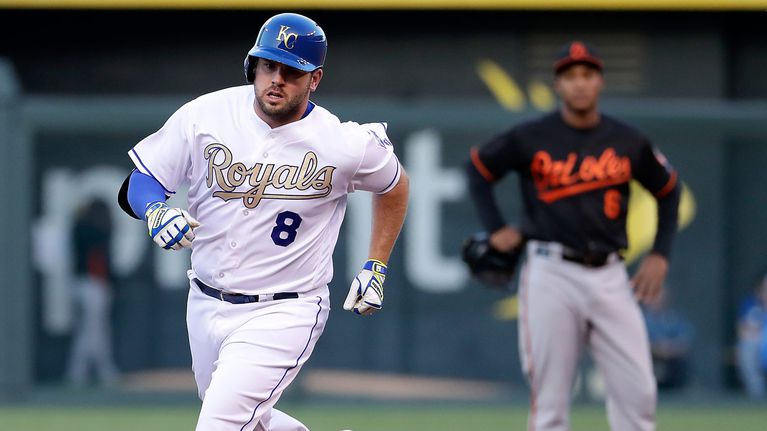
Posted by: | CommentsThe Yankees are still chasing their 27th World Championship, but that won’t stop the hot stove from warming up. After hearing that Matt Holliday’s top choice is the Yanks over the weekend, today we fhear rom a Yankee official – via Jon Heyman – that “I’m not absolutely positive we’re going to go for (Holliday).” Me? Well I’m not “absolutely positive” they should go for Holliday either. He’ll be too damn expensive, and there are just too many concerns about his ability to thrive in the American League. It’s a costly gamble, but the Yanks surely could afford to take it.
Holliday’s top choice the Bronx, says Davidoff
Posted by: | CommentsAs we recover from the collective hangover brought on by the Yanks’ epic Game 2 victory, the rumor mill is a-tilt today. The rumor-du-jour involves Matt Holliday, one of the top free agents this winter. According to Ken Davidoff, Holliday’s top choice is New York.
Although the Sunder Insider piece isn’t online as part of Newsday’s awful new website, Davidoff summarized the rumor:
According to a person in the loop, Matt Holliday’s top choices in free agency are: 1) Yankees; and 2) Mets. The Oklahoma native is apparently not intimidated by New York.
As of now, I’d say the Yankees don’t want to make another large purchase like that, in the wake of last winter’s shopping spree – and if they win it all, then the pressure from the yakosphere (trademark Neil Best) to get Holliday should alleviate.
The Mets? Based on Jeff Wilpon’s words from a few weeks ago, they’ll consider anything and everything. Of course, many industry folks are very skeptical that the Mets will actually do so. Holliday’s primary reservation about joining the Mets? Yup, hitting at Citi Field. Maybe they can alter the dimensions? Jerry Manuel hinted near the end of the season that wasn’t impossible.
Mike Silva, writing about this rumor, reminds us of a recent Jon Heyman report in which the Sports Illustrated scribe’s sources say Holliday’s agent will ask for seven years and $150 million. That, of course, is just an initial request. Holliday would probably be content with five years and $100 million.
Meanwhile, in the Bronx, Bill Madden checks in with the Yanks’ off-season preparations. Even though the team on the field is focused on their ultimate goal, the Front Office is busy assessing free agency. Madden believes the Yanks will resign either Hideki Matsui or Johnny Damon on a short deal and attempt to fill in from free agency. Interestingly, Madden drops Justin Duchscherer’s name and picks Desmond DeChone Figgins as a left field replacement. Never mind the reality that Figgins has 36 games of left field experience under his belt.
If the Yanks’ choice comes down to one between Holliday and Figgins, I pick Matt Holliday. He’s two years younger than Figgins and probably won’t suffer through as big a decline as Figgins would. The Yanks have around $50 million coming off the books this year and no major pitching holes to fill. They can spend the money on offense, and Holliday wouldn’t be a poor choice if the price is right. But will the price really be right?
The Derek Jeter contract conundrum
Posted by: | CommentsAt some point soon — hopefully today because I’ll be there — Derek Jeter will become the Yanks’ all-time leader on the hit list. In a few weeks, we’ll hear rumblings of a potential MVP award. In a few years, he’ll reach that 3000-hit plateau and possibly even that 3500-hit mark. Along the way, he’ll hit his 250th home run and score his 2000th run.
There is, of course, one monumental event that is going to arrive before a few of those milestones: Derek Jeter’s ten-year contract will expire. Make no mistake about it; this is a big deal.
Over the last few weeks, Joe and I have spent some time exploring Jeter’s contract status. While Jeter hasn’t been saying much about his new deal, I speculated that the Yanks might break with tradition and sign Derek to an extension this year. Such a move would cut off the media circus surrounding Derek the Free Agent before it could begin. Late on Friday, though, Joe noted that multiple reports indicate the Yankees will wait until after 2010 to re-up with Jeter.
Today, Bob Klapisch introduces a few new elements to the mix as he asks one very big question: While the Yankees, in the words of Jayson Stark, will probably “take care of” Jeter, what will happen when and if Derek asks for a four-year, $100-million extension? In a piece high on superlatives, Klapisch writes that Jeter has “a larger footprint than anyone in the organization.” Since 1995, Derek Jeter has been a Yankee, and since shortly thereafter, the two — Yankee baseball and Derek Jeter — have been synonymous. Jeter, says Klapisch, knows this and knows what it can mean for him:
Jeter has made it clear he’d like to finish his career in pinstripes. The Yankees certainly want him back when his current deal expires after 2010. Everyone agrees on that much. But after earning $41 million in 2009-10, Jeter will be in no mood for a pay cut, not after seeing A-Rod awarded a 10-year, $275 million deal after the 2007 season.
How much will Jeter be worth at age 37 is a question the Yankee hierarchy doesn’t dare discuss publicly. No team in the last 50 years has won a championship with a shortstop that old, although that won’t deter either side from finding middle ground. That is, unless Jeter wants to stay at the position into his 40s and is thinking of earning $25 million a year.
The Yankees are bracing for the possibility that Jeter could indeed ask for, say, $100 million over four years, knowing the captain would have enormous leverage in the talks. That’s why management won’t even begin to discuss a new contract this winter; in the wake of an MVP-caliber season, the cost would be prohibitive.
Instead, the Yankees will run the table on Jeter’s existing deal and hope common sense prevails in 2011. One industry analyst says, “let’s see if (Jeter) realizes the market has come down” since A-Rod’s record-setting contract.
Giving Jeter a contract extension after his 2009 campaign would be, simply put, a bad business decision. The Yankees would be paying Jeter going forward for what he has accomplished this year, and while Jeter appears ageless now, he is more likely to decline over the next five years than he is to duplicate this season’s numbers. So the Yankees will wait.
Derek, too, will wait. He’ll wait for the money that he thinks should be his. He’ll wait for the offer that should head his way. In the end, Derek Jeter will resign with the Yankees. He can’t really go play anywhere else, and the Yankees can’t afford to see him leave. How much it will cost though to keep him is anyone’s guess. I fear that $100 million contract, but it won’t be too much less than that.
Don’t look for a Jeter extension before his contract is up
Posted by: | CommentsLike it or not, the topic of Derek Jeter’s contract is going to come up a lot over the next year, and we’ll see increasing mentions as we move closer to the end of the 2010 season, when his current deal expires. We know that Jeter isn’t thinking about his contract right now, and it appears the Yanks aren’t either. Both Jayson Stark and Jon Heyman note the obvious: the Yanks will wait until after the 2010 season to negotiate with Jeter. In other words, everyone gets treated the same. Mo and Posada didn’t get extensions before their deals were up, and it appears Jeter won’t either.
Heyman notes that negotiations this off-season would heavily favor Jeter, since he’s in the midst of a top-three season (1999 and 2006 also stand out). While that’s true to some extent, it still doesn’t seem like the top reason why the two parties will wait things out. The idea of treating Jeter the same as his peers Posada and Rivera would seem paramount in this situation. Then again, the Yanks got burned on the Posada deal, and might have been able to lock up Mo for a bit less had they negotiated before the season. Perhaps they’d do better to haggle with Jeter this off-season.
There’s one sentence in the Stark piece that makes it seem as if the timing of the deal won’t much matter. “From what we’re gathering, Jeter and Close have been all but assured by the Yankees that the club will make sure Jeter is taken care of when the time comes.” That sentence is rife with ambiguity, from the opening clause to the “taken care of” bit. This is what many of us presumed. Both parties know that they’re best taken together, and neither wants a messy divorce. They’ll come to some sort of agreement. I’m pretty sure players can’t have an ownership stake in the team, but could the Yankees set that up for Jeter for when he retires?
Yes, this subject will be beaten to death by the time the 2010-2011 off-season rolls around. Sorry. The tenor of the discussion seems to be positive, though. I know many people who think that the situation could get ugly, but I’m not among them. Derek Jeter and New York go together like all those cliches about things that go well together. With his contract and endorsement deals, Jeter is set for life. I think we’ll see a rather painless reunion after next season.
Yanks flirted with Mike Cameron, Brad Penny
Posted by: | CommentsAccording to Ken Rosenthal, the Yankees again looked into acquiring Mike Cameron before the August 31 waiver trade deadline. Over the winter it seemed like the Yankees were close to a deal for Cameron, but Brian Cashman put on the brakes. A few weeks later, they landed Mark Teixeira. After getting Andy Pettitte to sign on the dotted line, it appeared as if the Yankees were done spending for the winter, and the Cameron talks evaporated.
As the season progressed, it became clear that taking on Cameron and his $10 million salary might not have been the most prudent move. Melky Cabrera had a hot April, and Brett Gardner picked it up when Melky fell off a bit. They made a serviceable tandem through July, for a fifth the price of Cameron. There were some murmurs of a deadline deal possibility after Brett Gardner broke his thumb in late July, but that looked like more speculation than substance.
Come the end of August, things looked a bit different. Melky, playing every day with Gardner still on the shelf, fell into a major slump. He hit .223/.264/.350 on the month, and that gets even worse if you look at his numbers after hitting for the cycle: .202/.248/.277 in 102 PA. Why Jerry Hairston didn’t take more reps in center I do not know (and I doubt it has anything to do with his Type B free agent status, which will be compromised if he plays much more in the outfield). In any case, by the end of August a platoon partner for Melky seemed like an attractive option.
The Yankees, according to Rosenthal, didn’t want to add the remainder of Cameron’s salary, roughly $1.5 million, to their ledger. Again, some might wonder what a mere $1.5 million means to the Yankees. As I mentioned yesterday, there was a similar story regarding Brian Bannister, where the Yankees were interested but didn’t want to pick up the tab. These cases are similar, but it’s not a pure money issue.
In both cases it seems that the Yankees didn’t want to take on the salary because they believed the player in question wasn’t worth the upgrade. They didn’t want to pay the remainder of Banny’s salary because they believed that their in-house options could provide similar production at no increase to the payroll. With Cameron, they thought it wouldn’t be worth the money and the roster spot to add Cameron, especially when Brett Gardner should be making his return soon.
Adding a veteran like Mike Cameron is nice, but when you have an in-house tandem that has worked, taking on him and his salary, in addition to the roster spot he’d cost, doesn’t seem all that worth it. Perhaps when he hits free agency the Yankees can entice him. He could platoon with Gardner or Melky next season, freeing the Yanks up to trade whoever brings the bigger return for another part. I do find it doubtful, though, that Cameron would come into such an obvious platoon situation which also involves a soon-to-be-promoted top prospect.
On the Brad Penny front, it appears the Yankees were deadly serious about adding him. Rosenthal says that they “recruited him with calls from manager Joe Girardi, outfielder Johnny Damon and Penny’s former teammate in Florida, right-hander A.J. Burnett.” From the Yankees standpoint it made sense. Despite Penny’s failings in Boston, he’s still probably a better option than Chad Gaudin. But unlike some other upgrade options which would have costed prospects and/or money, Penny was essentially free — he’ll cost the Giants just around $100K.
Penny was smart to go to the NL. After pitching poorly for the Red Sox he had a chance for a fresh start. Why press your luck in the AL East when there are two NL teams looking to employ your services? Both the Giants and the Rockies were better options, and Penny made the right move by going to the better pitcher’s park. The guy wants to get paid this off-season and he wants to pitch in the postseason. San Fran presents the best of both worlds.
The Yankees were — well, not necessarily smart, but certainly shrewd to decline a trade for Cameron. He’s an offensive and defensive upgrade over Melky, but the question is of how much. Probably not $1.5 million worth. Plus, with Gardner on the mend, that would make three center fielders on the roster. Sure, they can carry 40 men on the bench now, but come playoff time would the Yankees carry all three? Doubtful.
It looks as though the Yankees were active in exploring deadline deals in both July and August, but each time found little to their liking. It seems to be Brian Cashman’s M.O. He doesn’t make moves for the sake of making moves, though he’s more than apt to make small moves, and those have worked out well this year. But when a deal doesn’t represent a clear and significant upgrade, it seems like he’s more than willing to hold. Sometimes that’s the right move.
Perrotto: Yanks want Damon back for one year
Posted by: | CommentsWhile we still have a month left of regular season baseball and, hopefully, a few weeks of October play in the Bronx, nothing dominates the conversation quite like the Hot Stove League does. In his latest weekend roundup, John Perrotto drops in a bit about the Yankees and Johnny Damon:
The Yankees would prefer to re-sign Johnny Damon to a one-year contract for 2010 and allow outfield prospect Austin Jackson a second year to develop at Triple-A, meanwhile pursuing such big-name free-agent outfielders as Matt Holliday and Jason Bay in the offseason.
This is not, of course, the first time we’ve heard the rumblings about Damon and the Yanks. We looked at some early Damon rumors on the 18th and the potential costs of a deal on the 25th. One way or another, Damon and the Yankees will exchange ample conversations about 2010 once November rolls around.
What strikes me about Perrotto’s report are the two other pieces. The first part involves Austin Jackson. As a 22-year-old at AAA, Jackson’s numbers are far from terrible. He is hitting .294/.352/.401 and has stolen 22 out of 26 bases. That’s the good of it.
The bad of it is rather extensive. He has hit just four home runs all season; he has struck out 118; and his BABIP is an unsustainable .386. Plugging his numbers into the Minor League Equivalences tool gives us a line of .255/.301/.340. He makes Melky look like an All Star, and it is clear that Jackson needs a least part of another season at AAA.
Next up are the dueling Jason Bay/Matt Holliday rumors that Perrotto drops. For the most part this year, we’ve heard about varying degrees of interest the Yanks may have in these two players. Some sources say the Yankees will kick the tires on Bay — to force the Red Sox to pay more — and Holliday because he’d be a great fit for Yankee Stadium. Other sources say the Yankees are loath to dole out more multi-year contracts for aging outfielders and may not be in a position to do so financially after landing Mark Teixeira last winter.
Between Bay and Holliday, though, my choice would be Holliday. The current Cardinals outfielder is 21 months younger than Bay and has proven that he can hit outside of Coors Field this year. The idea of giving four or five years to either of these players though isn’t one I can readily embrace.
As the calendar marches on, we’ll hear a lot about Damon and the Yanks’ outfield plans for next year. They have a left field vacancy to consider and a center field spot that could use an upgrade. With Jackson potentially waiting in the wings but still some time away, the Yanks have some tough developmental choices to make this winter. How it plays out will be interesting indeed. It always is.
Addendum: Another reason the Yanks might be interested in retaining Damon.
Yanks, Damon heading toward a new deal
Posted by: | CommentsOnce this season wraps up, there are few big-name free agents among the Major League outfielders. Matt Holliday will clearly lead the list with Jason Bay and the oft-injured Vladimir Guerrero behind him. Beyond that, a bunch of mediocre outfielders and aging stars will tempt teams.
One of those aging stars we know quite well. The Yankees’ left fielder Johnny Damon will be a free agent at the end of the season. A year ago, I would never have predicted a Damon return to the Bronx for 2010 and possibly beyond, but Damon has turned in a 2009 to remember. He is hitting .283/.364/.521 with 22 HR. He should top his career high in home runs of 24, and his OPS+ currently stands at 129, also a career high.
As the season has unfolded, Johnny Damon has continually stressed his desire to remain in the Bronx, and the Yankees have noticed both this enthusiasm and his production. According to Tyler Kepner, the Yankees and Johnny Damon may be picking each other as Damon hits free agency. The Times scribe writes:
Before the season, there was a sense that the Yankees would allow Damon to move on and turn over his left-field spot to a prospect like Austin Jackson or a younger free agent like Matt Holliday. But Yankees officials seem to understand Damon’s value on the field and in the clubhouse, and now they would like him to return. When the Yankees want to keep a player and the player wants to stay, that is usually what happens.
“I don’t know where else I would want to go to,” Damon said. “Obviously, that’s not the right thing to say when you’re about ready to approach free agency, but I’m very happy with playing in New York, and my family’s happy I play for New York. There’s no bigger place to go. If you play well here, you’re going to get paid. New York has the resources. But we also have the chance to win every year. I don’t want to attempt to go make more money elsewhere, for more years, with a chance to be out of the race by the first of June.
…Damon’s agent is Scott Boras, who is never shy about seeking the highest bidder. But Damon said that during his last free agency, he instructed Boras not to bother gathering offers from West Coast teams. He said Boras would listen to his wishes. “Scott knows,” Damon said. “Even if I did sign another two- or three-year deal to come back to New York, that doesn’t necessarily mean I’ll be retired after that. There could be a time where I go somewhere and pinch-hit for a year or whatever.”
Damon, according to Kepner, recognizes that he’ll have to take a pay cut. After all, no team will pay an outfielder of his age more than the $13 million a year Johnny currently makes.
Now, we’ve recently saluted Johnny Damon. Not only is having one helluva season, but his career ranks him up there. His hits, runs and stolen base totals are among the leaders of this generation of baseball players, and he has been remarkably durable — or at least willing to play through injuries — since 1996.
Yet, I’m not sure how much I would give Johnny Damon. Two years seems reasonable, but should the Yanks be depending upon a 37-year-old Damon in 2011? If he isn’t blocking any younger — and potentially better — players, then so be it. As long as the Yanks do not handicap themselves with a sentimental deal, bring back Damon, but I’m rather wary of giving 36-year-old outfielders with decreasing range too many years or too much money.
Assessing possible waiver pickups
Posted by: | CommentsWith the trade deadline behind us, teams are limited in the players they can acquire. Rather than having unrestricted trading access with the other 29 clubs, each team is restricted to players who clear waivers, or on whom they make a claim. Yankees GM Brian Cashman harkens back to earlier in this decade, when he, using the Yankees financial might, put in claims on nearly everyone in order to block trades to rivals. This year, with many teams at or above their target payroll, putting in a claim leaves a team at risk of absorbing a poor contract.
Cashman says he expects more activity in August this year than in years past, but considering the lay of the land, that might not be the case. As it stands the Red Sox are behind the Yankees in the standings, so they have a chance to put in a claim first. When the Jays place Roy Halladay on waivers — and they certainly will — the Sox will almost certainly put in a claim. Even then, a team like Texas or Detroit might place their claim first, effectively cutting out the Sox. The pickings could be slim by the time it gets to the Yanks and Sox.
Still, there are some extraordinarily bad contracts out there and not even the Sox, with their relatively low payroll, will dare put in a claim. That could open the negotiating table for the Yankees to acquire that fifth starter they sought last week. Problem is, few if any of the potential options do the Yankees much good. Jon Heyman breaks down the players who will clear and who might clear. He adds those who won’t clear but could be dealt to a claiming team, but the Yankees aren’t in a position to be dealing with those players.
The pitchers include Bronson Arroyo, to whom we should just say no; Aaron Harang, who is pitching like a No. 5 but is being paid like a No. 2; Miguel Batista, who is 38 (!!), hasn’t started a game this year, is walking 5.2 per nine innings, and despite the M’s stellar defense has allowed 10.1 hits per nine; Juan Cruz, who is pitching horribly (and people wanted to kill Cashman in April for not signing him); and Ron Mahay, whose walks would make us want to throw a brick through the TV.
There are still some who could clear waivers. With the Red Sox behind the Yankees in the standings, it’s not likely. As Heyman writes, “The Yankees need a No. 5 starter, and the Red Sox know it.” Yet, let’s not forget that the Red Sox could use another starter themselves. The question, of course, is of whether they’d jettison Brad Penny or John Smoltz for a better option. The further question is of whether any of the might-clear names represent any kind of significant upgrade.
Of the players who might clear waivers, Heyman calls Jon Garland dependably mediocre, while I call him dependably crappy — his K rate continues to decline despite a move to the sissy league; Doug Davis, who leads the NL in walks — and the Yankees already have the AL leader; and Gil Meche, who like Harang is pitching like a No. 5 but is being paid like a No. 2. It doesn’t help that Meche hasn’t pitched a game since July 11 and has basically been pitching hurt to some degree all season. Oh, and don’t forget Uncle Ronny Villone, whose 1:1 K/BB ratio just isn’t welcome back in New York.
With Sergio Mitre holding down the fifth spot, there is plenty of room to improve. But look at the names above. Do any of them represent a true upgrade? Perhaps marginal, but even then you have to factor in the cost to acquire the player. At that point even a marginal upgrade might turn into a long-term downgrade. All that just for a few runs saved. Given what we know about Brian Cashman’s M.O., it’s safe to say that he’ll stay away from this crop.
The best thing that could happen to the Yankees is for some improvement in the bullpen. If Brian Bruney finally regains his form (and he was pretty good in the first 1.1 innings he pitched on Saturday), if Mark Melancon keeps throwing like he has his last three times out, if Damaso Marte can come back strong, and if Al Aceves is really only suffering from shoulder fatigue, the Yanks will have a strong bullpen even without Phil Hughes. While some think it’s too risky to put him back in the rotation after a long stint in the pen, he’s clearly their best option to fill the fifth starter hole. He can always return to the bullpen for the playoffs (though at that point you might see Joba in the pen and Phil in the rotation).
That’s a lot that has to go right, though, including the transition of Hughes back to the rotation. It’s not at all likely, and the Yankees face the prospect of Sergio Mitre or, gasp, Kei Igawa filling the fifth spot in their rotation for the rest of the year. There’s always the Jason Hirsh experiment, but that’s just as unlikely as the above scenarios. The Yankees are not in an easy spot with their pitching staff right now. They can, however, take solace in knowing that every other team in the AL has similar problems. It’s just a matter of whose are more exposed down the stretch. The above-mentioned players aren’t going to turn it around for any staff.
Just say no to Bronson Arroyo
Posted by: | Comments
It all started yesterday afternoon. AOL FanHouse’s Jeff Fletcher noted that the Reds were “close to doing something,” meaning the completion of a trade. The likely candidates were Bronson Arroyo, Aaron Harang, and Francisco Cordero. Each makes quite a large sum for the rest of this year and next, and with the Reds out of contention it would make sense for them to get out from under at least one of those contracts. Any time we hear that something is close, ears perk up. It didn’t take long for Fletcher to find out which deal the Reds were “close” to.
About two hours after his original report, Fletcher wrote the the Reds and Yankees were working on a deal for Bronson Arroyo. This sent a tremor through the Yankees fanbase. Why in the hell would they want Bronson Arroyo? He’s pitched progressively worse every year since the Red Sox traded him to the Reds, and he’s owed a ridiculous amount of money for the remainder of this year and next. Considering the monetary and potential player costs of acquiring Arroyo, an easy case could be made that the Yankees would be better off standing pat.
A 1995 third-round pick of the Pittsburgh Pirates, Arroyo struggled in his first few seasons, allowing way too many hits while walking too many batters for his strikeout rate. In February of 2003, after stints over the previous three seasons, the Pirates placed Arroyo on waivers. The Red Sox picked him up. He wouldn’t join the big league club full-time until 2004, but when he arrived he did not disappoint, posting a 3:1 K/BB ratio over 178.2 innings.
The next year wasn’t so kind to Arroyo. He pitched 205.1 innings for the Sox, but his strikeout rate plummeted from 7.2 per nine in 2004 to 4.4 per nine in 2005. This helped cause a half-run increase in his ERA. Still, the Sox apparently thought he was still worth holding onto, signing him to a three year, $11.25 million contract in January 2006. Little did Arroyo know that the contract would be his ticket out the door.
In March 2006, the Sox swapped Arroyo and $1.5 million for Wily Mo Pena. In essence, Arroyo had agreed to a team-friendly deal, only to have it used as trade bait. Whether it was the effect of pitching in the NL, the desire to prove the Red Sox wrong, or just sheer luck, Arroyo pitched insanely well in 2006, posting a 3.29 ERA over 240.2 innings, bumping his strikeout rate back up to around seven per nine, and improving his K/BB ratio to 2.88:1, up from 1.85:1 in 2005. The Reds thought they had found a gem, while Wily Mo languished with the Sox, and would eventually be traded in August 2007.
Apparently not content to ride out the remainder of Arroyo’s team-friendly deal, the Reds signed him to a two-year, $25 million extension in February of 2007. The move was perplexing at the time. Why would the Reds, with Arroyo under contract for two more seasons at an eminently reasonable rate, sign him for two additional seasons, plus an expensive club option, with a relatively expensive buyout, for 2011? His 2007 performance would add to those questions.
In his second year in Cincinnati, Arroyo made one fewer start than in his first, but pitched 30 fewer innings. His WHIP rose from 1.19 to 1.40. One reason for his decline is the rise in his number of hits per nine innings — almost 10 in 2007, compared to 8.3 in 2006. His ERA rose yet again in 2008, to 4.77, below league average. Again he made 34 starts, but pitched 10 fewer innings than in 2007. His WHIP took another jump to 1.435. All this before the contract extension kicked in.
This is the first year of the extension, and Arroyo has not earned his $9.5 million to this point. His ERA sits at 5.21, the worst it’s been since 2001, and which also places him as the league leader in earned runs allowed. His WHIP has climbed again to 1.472. Worst of all, his walk rate is near 3.5 per nine, and his strikeout rate is just 5.3 per nine, down from 7.3 per nine last season. He’s essentially gotten worse with each passing year on the Reds.
Arroyo has posted a few gems this year, including a July 10 complete game shutout of the Mets. He followed that up with seven innings of shutout ball against the Brewers. However, in his last start against the Dodgers he posted another clunker, five runs over 5.1 innings, including four walks. It’s just another start in Bronson Arroyo’s horribly inconsistent 2009 season.
With all this in mind, it’s difficult, if not impossible, to understand why the Yankees would want to acquire Arroyo. He’s pitched well in the past, but he’s certainly not the pitcher he claimed to be in 2006. His contract is among the worst in the game, and he’s still owed $13 million next season, considering his buyout. Bad pitcher + bad contract = bad acquisition. It’s as simple as that. So why are the Yankees connected with this guy?
Apparently, the rumor was just that. As PeteAbe noted, the Yanks shot it down. Jon Heyman got a quote saying that a trade is “not realistic at this point.” Even Fletcher, whose source said that the deal “will get done,” subsequently removed the line from his post. All seems to be right again for the Yankees.
There are still three more days until the 4 p.m. trade deadline on Friday, and the Yanks could certainly make a move for a pitcher before then. As we noted yesterday, the Yanks might not be able to acquire a significant target after the deadline, because the Sox are in second place and could block a potential move. Both teams would benefit with an upgrade at the backs of their rotations. Despite his overtures, expect Cashman to treat this deadline with a sense of urgency. If there is a deal to be made, expect him to pursue it. We just hope it’s not for Bronson Arroyo.