Archive for Scouting The Market

Dallas Braden

(Norm Hall/Getty)

Pitchers and catchers are due to report one week from today, and for the most part the Yankees’ pitching staff is pretty much set. Ivan Nova and David Phelps will battle for the fifth starter’s job in Spring Training, with the loser presumably sliding into a swingman role. Injury is pretty much the only thing capable of changing the other four rotation spots or other six bullpen spots at this point.

No team ever makes it through a season using just five starters and just seven relievers, of course. At some point the loser of that Nova-Phelps battle will move into the rotation, just like guys who start the season in the minors will find themselves in the Bronx. It’s inevitable. Assuming Dellin Betances continues pitching in relief as he did during the Arizona Fall League, the Triple-A Scranton rotation will likely feature righties Adam Warren and Brett Marshall and lefties Shaeffer Hall and Vidal Nuno. That leaves one starting spot for a veteran, a low-risk minor league contract guy — like Ramon Ortiz last season — to serve as depth. A seventh/eighth starter type.

The free agent market is pretty desolate at this point of the winter, but here are four pitchers who could fit the bill.

LHP Dallas Braden
Braden, 29, has not thrown a pitch in either the Majors or minors since April 2011 due to a pair of major shoulder surgeries — torn capsule (May 2011) and torn rotator cuff (August 2012). He attended Texas Tech’s alumni game about two weeks ago but did not pitch, and that’s the closest thing I can find to a rehab update. In other words, there is no update.

Braden was very good for the Athletics from 2009-2010 before getting hurt (3.66 ERA and 3.77 FIP), though his strikeout (5.30 K/9 and 14.2 K%) and ground ball (39.0%) rates didn’t exactly stand out. He’s always been a soft-tossing — average fastball velocity from 2009-2010 was 87.6 mph — changeup specialist, so losing velocity due to the shoulder problems might not be the kiss if death. Given the typical rehab time associated with rotator cuff repairs and the unlikelihood that he can contribute at all in 2013, Braden is more of a candidate for a David Aardsma contract — one-year with a super-low base salary plus a club option — than someone a team could count on for depth this summer.

RHP Derek Lowe
Back in October we heard the 40-year-old Lowe would look for a job as a starter before deciding whether to return as a reliever, and apparently the offers to start have been scarce given his continued unemployment. I wrote a mailbag post about re-signing the sinker baller back in late-December, saying I liked the idea of bringing him back as a swingman candidate on a minor league contract. Anything more than that would be pushing it, and Lowe doesn’t strike me as the kind of guy who would bide his time and wait for an injury down in Triple-A. I think he would sooner retire.

(Otto Greule Jr/Getty)

(Otto Greule Jr/Getty)

RHP Dustin Moseley
Another former Yankee, the 31-year-old Moseley had surgery to repair his rotator cuff and labrum last April. Like Braden, I can’t find any updates on his rehab beyond the initial reports. Considering how long these things usually take, he’s probably not going to be ready to return to game action until midseason. That alone makes Moseley, who pitched to a 3.30 ERA (3.99 FIP) in 120 innings for the Padres in 2011, a less-than-ideal candidate for Triple-A depth. He would have been a great fit if healthy, but no dice.

LHP Jonathan Sanchez
Sanchez, 30, just finished a nightmare season that saw him pitch to a 8.07 ERA (6.60 FIP) in 64.2 innings for the Royals and Rockies. He walked (53) more batters than he struck out (45), and his fastball velocity continued its gradual decline.

That said, Sanchez is one year removed from a 4.26 ERA (4.30 FIP) with the Giants in 2011, when he posted his third consecutive season with more than a strikeout per inning (9.06 K/9 and 23.0 K%). The walks (career 5.00 BB/9 and 12.6 BB%) are a concern and after nearly 800 big league innings, it’s getting to be time to stop hoping for improvement. Sanchez has shown swing-and-miss stuff in the recent past, so as long as he isn’t hiding an injury, he’d be a pretty good reclamation project for the Triple-A rotation. The problem is that he’s reportedly close to a deal with the Pirates.

Categories : Hot Stove League
Comments (54)

(Jamie Squire/Getty)

Early yesterday afternoon, we learned the Nationals agreed to re-sign Adam LaRoche to a new two-year contract. The move essentially pushed Mike Morse out of the team’s plans, as his primary positions — outfield (Denard Span, Bryce Harper, Jayson Werth) and first base (LaRoche) — are now occupied by players who aren’t going anywhere. Shortly after the LaRoche news broke, Ken Rosenthal reported Washington was discussing Morse in trades with several teams. Shortly after that, we learned the Yankees have interest in acquiring him.

The fit is obvious. Morse, 30, is a right-handed hitter with power who is signed for just one more year at an affordable $6.75M. He’ll become a free agent next offseason. The Yankees need a bat and have been fixated on one-year contracts all winter, and Morse fits both bills. Given the Nationals’ reported asking price — a left-handed reliever and prospects/pitching depth — the Yankees would be hard-pressed to find a better trade fit. Before we move any further, let’s break down Morse’s game just so we all understand what he brings to the table and where his game is lacking.

The Pros

  • Morse offers big time power from the right side. He hit 18 homers in 102 games last season and 31 homers in 146 games a year ago. Nationals Park is perfectly neutral when it comes to right-handed homers according to the park factors at FanGraphs, so Morse’s power production was not inflated by his ballpark. Over the last three years, he owns a .220 ISO and a 21.3% (!) HR/FB rate.
  • Late Update: I neglected to mention this, but Michael Eder at The Yankee Analysts bailed me out. Morse does a lot of damage to the opposite field, which fits very well for a right-handed hitter in Yankee Stadium.
  • Morse does not have a platoon split at all. He’s hit .296/.344/.512 (133 wRC+) against righties and .294/.349/.517 (136 wRC+) against lefties over the last three years. He managed a 117 wRC+ against righties and a 102 wRC+ against lefties in 2012, but there are some sample size issues with the latter (barely 100 plate appearances).
  • In nearly 1,700 career plate appearances, Morse owns a .344 BABIP (.339 since 2010). It’s not a fluke at this point. He’s a ground ball (48.4% last three years) and line drive (18.9%) hitter, which tends to result a lot of base hits. Unsurprisingly, Morse is a career .295 hitter in the show (.296 last three years).
  • Morse does offer some positional flexibility. He came up as a shortstop with the Mariners (despite being 6-foot-5), but that didn’t last and he’s since settled in as a corner outfielder/first baseman. DH is also an option as well, obviously.
  • As I said before, Morse is owed just $6.75M next year and will become a free agent after the season. By acquiring him this offseason, his new team would be able to make a qualifying offer next winter and receive draft pick compensation should he sign elsewhere. A midseason trade doesn’t allow that.

The Cons

  • Morse’s plate discipline leaves a lot to be desired. He’s walked in just 5.7% of his plate appearances over the last three seasons, including 3.7% (!) in 2012. His strikeout (22.1%) and contact (75.5%) rates are both well-below-average during that time, ditto his miniscule 3.69 pitches per plate appearances average. Quick at-bats are not the Yankee Way™, but that’s what you’re getting here.
  • He’s no stranger to the DL. Morse missed most of Spring Training and the first two months of last season with a right shoulder strain, and in 2010 he missed a month with a calf problem. Morse also missed the entire 2008 season with a torn labrum in his right shoulder, and two years before that he missed a few weeks with right knee surgery.
  • The ground ball tendencies became quite extreme last season. Morse posted a 55.3% grounder rate in 2012 after sitting at 44.8% from 2010-2011. That explains the .190 ISO, which was his lowest full season mark since his rookie year in 2005. When a power hitter has a shoulder problem and suddenly has a tough time lifting the ball in the air, it’s a red flag.
  • Morse offers zero speed or value on the bases. He’s 6-for-12 in career stolen base attempts and has taken the extra-base (first-to-third on a single, etc.) just 33% of the time through the years. The league average is in the 39-40% range.
  • Morse is a bad defensive outfielder. The various metrics all agree he’s been a poor defender since finally breaking out as a full-time player three years ago: -24.5 UZR, -8 DRS, -2 Total Zone, and -3 FRAA. The first base metrics are a little better, but stats on first base defense aren’t as reliable as they are at the other positions.

The Yankees continue to seek a right-handed hitting outfielder to complement their all left-handed hitting outfield, but Morse is far too good for a platoon role. He’s not an Andruw Jones-esque bench player. Morse should be in the lineup against both righties and lefties on an everyday basis, preferably as the DH. If they have to stick him in right field twice a week to give some of the older guys time at DH, so be it. They lived with Raul Ibanez out there on an almost full-time basis last summer and he wasn’t nearly as good offensively (late-season super-clutch homers aside). Morse “strongly opposes” being a DH, but that’s not really his decision to make at this point of his career.

Like I said in the intro, the Nats are seeking a lefty reliever and prospects/pitching depth in return for Morse. That lines up with recent trades involving one year of similar hitters like Carlos Quentin (White Sox to Padres) and Josh Willingham (Nats to Athletics), so Washington isn’t being unreasonable. The Yankees have plenty of left-handed relievers to offer in a trade, that’s not an issue. Boone Logan‘s name jumps out because he’ll be a free agent next winter like Morse, but c’mon, a lefty reliever shouldn’t be a dealbreaker. If the Nats want Clay Rapada (who is more effective against lefty hitters than Logan) or Cesar Cabral or Francisco Rondon instead, fine.

The rest of the package is where the haggling figures to happen. New York has some minor league pitching depth to dangle in Adam Warren, Brett Marshall, and Nik Turley, though Washington figures to push for Ivan Nova or David Phelps. Those two shouldn’t be off the table, but I think the Yankees would have to get something else back in addition to Morse. Maybe they could really expand the deal to include one of Washington’s catchers — Wilson Ramos or Kurt Suzuki. That’s a whole other can of worms I don’t want to worry about right now. The Yankees have plenty of competition because reports indicate several teams have interest in Morse, but I feel they have the pieces to get a deal done. It’s just a question of whether they’re willing to pull the trigger to acquire a player who fits their needs very well.

Categories : Hot Stove League
Comments (105)

(Jamie Squire/Getty Images)

The Yankees addressed their major pitching needs earlier this offseason by re-signing Hiroki Kuroda, Andy Pettitte, and Mariano Rivera to one-year contracts. Their recent focus has been on the position player side, though the Kevin Youkilis and Ichiro Suzuki signings plug two of their three biggest holes. A right-handed hitting outfielder and DH is still on the agenda for the rest of the winter.

Despite those position player needs, the Yankees also figure to be on the lookout for cheap, long-term help pretty much anywhere on the field given the plan to get under the $189M luxury tax threshold in 2014. Kuroda, Pettitte, and Phil Hughes are all scheduled to become free agents next winter at a time when young arms like Michael Pineda, Manny Banuelos, Jose Campos, and Dellin Betances have either regressed or gotten hurt. Ivan Nova‘s miserable 2012 effort is another pitching black mark as well. The rotation post-2012 is a concern and there won’t be much money available to improve it via free agency.

The Tigers, on the other hand, have tons of pitching. Justin Verlander, Anibal Sanchez, Doug Fister, and Max Scherzer are all signed or under team control for several years, plus they have Rick Porcello and Drew Smyly in reserve. Both pitchers are reportedly available in trades and drawing interest, and there’s a natural fit here because the Yankees could use some young arms. Porcello, a New Jersey native, is getting expensive through arbitration and has been generally underwhelming as a big leaguer (4.55 ERA and 4.26 FIP). He’s not a great fit for New York. Smyly, on the other hand, might be. Let’s break his game down.

The Pros

  • First things first: Smyly is left-handed and that’s always a plus in Yankee Stadium. Baseball America ranked him as Detroit’s third best prospect before the season, and they call him a future number three or four starter in their subscriber-only scouting report.
  • “Smyly has an advanced understanding of how to attack hitters, which allows his average stuff to play up,” wrote Baseball America, who also praised his delivery and deception. “He throws his fastball at 87-92 mph with slight tailing life, commanding it down in the zone … He uses both a curveball and a slider, with scouts split on which is more effective. He also has a splitter-like changeup and a mid-80s cutter.”
  • PitchFX data confirms the scouting report and says Smyly’s fastball lived at 92 in the show rather than topping out there. He pitched to a 3.99 ERA (3.83 FIP) with strong strikeout (8.52 K/9 and 22.6 K%) and walk (2.99 BB/9 and 7.9 BB%) rates in 99.1 big league innings this summer. His minor league numbers (9.7 K/9 and 26.5 K%, 2.8 BB/9 and 7.5 BB%) are just as impressive in 143.2 total innings. Yeah, the Tigers aren’t shy about rushing their pitchers up the ladder.
  • Smyly did not pick up a full season’s worth of service time in 2012, so he remains under team control for six more years. He also has at least two and possibly all three minor league options remaining as well.

The Cons

  • Smyly had a stress fracture in his elbow as a college freshman at Arkansas and missed six weeks with a sore arm in 2011. He threw 121 total innings this year and his career-high is 126 a year ago. He’s a big guy (listed at 6-foot-3, 190 lbs.), but he has yet to prove his durability. There’s no way to reasonably expect 30 starts and 200 innings from him in 2013.
  • It’s only 243 total innings, but Smyly has been fly ball prone as a professional. His minor league ground ball rate (45.9%) is lower than what you’d expect to see from a good pitching prospect, and in the big leagues he kept the ball on the ground just 39.9% of the time. As a result, he can be homer prone.
  • Smyly picked up enough service time this season that he’ll surely qualify for Super Two status and be arbitration-eligible four times instead of the usual three. Young players can get expensive in a hurry as Super Twos.

I like Smyly more than Baseball America seems too, but there’s no shame in being projected as a number three or four starter anyway. A lot of people seem to take that as an insult. Smyly, who turned 23 in June, has shown five pitches at the big league level and both the willingness and ability (these aren’t the same things) to throw strikes. He also hasn’t shown much (if any) of a platoon split thanks to the cutter. That’s all you can ask for from a young starter in the American League and his debut this season should be considered a positive sign. No doubt about it.

The Tigers are a pretty stacked team with few holes to fill, but their bullpen is still lacking in a major way. They insist they’re willing to open the season with prospect right-hander Bruce Rondon in the closer role, but I don’t buy that for a second. Owner Mike Ilitch didn’t spend all that money to have a kid with a 5.8 BB/9 (15.1 BB%) in the minors over the last two seasons pitching the late-innings. It’s not just the ninth inning either, they need setup help as well.

The Yankees don’t have a ton of relief depth to use in a trade, but for six years of Smyly they could totally offer up two years of David Robertson. There are enough free agent relievers still available — Matt Lindstrom, Mark Lowe, Brandon Lyon, and even Rafael Soriano stand out — that New York could find a capable replacement(s) for Robertson should they move him. Smyly would give them some much-needed young pitching depth from the left side, someone who could step right into a big league rotation if need be or spend time in Triple-A if things get crowded. It would be a very risky move, but also one that could help the Yankees both win now and win later.

Categories : Hot Stove League
Comments (67)

(Stephen Dunn/Getty)

With Ichiro Suzuki back in the fold, the Yankees are set in all three outfield spots minus a right-handed complementary piece. They are still lacking a DH though, and given the offensive hit they’re expected to take behind the plate and in right field, finding a legitimate offensive producer for the DH spot is quite important. Raul Ibanez had some amazingly clutch homers in September and October, but his regular season performance (102 wRC+) didn’t wow anyone.

The Diamondbacks have been a popular team this offseason, mostly because they keep floating Justin Upton’s name in trade rumors. GM Kevin Towers has already dealt outfielder Chris Young (for Heath Bell) and top pitching prospect Trevor Bauer (for shortstop prospect Didi Gregorious), plus he’d made a handful of stealthy free agent signings (Brandon McCarthy and Eric Chavez). Upton’s name continues to pop up in trade talks, but both Steve Gilbert and Ken Rosenthal recently reported Towers is more likely to trade Jason Kubel.

Most Yankees fans remember the 30-year-old Kubel for his grand slam off Mariano Rivera a few years back (video), and to a lesser degree his dreadful postseason performances against New York while with the Twins (2-for-29 with 13 strikeouts). He signed a two-year, $15M deal with the D’Backs last winter and rewarded them by hitting .253/.327/.506 (115 wRC+) with a career-high 30 homers. Let’s see if he’s a fit for the Bombers…

The Pros

  • Kubel, a left-handed batter, hits righties pretty hard. He posted a .264/.348/.540 (129 wRC+) line against them this past year and .267/.338/.485 (119 wRC+) over the last three years. As his spray charts show (2012, 2010-2012), he’s primarily a pull hitter against righties and that will play very well in Yankee Stadium.
  • Despite the modest OBP, Kubel works the count very well. He saw a career-high 4.25 pitches per plate appearances in 2012, and over the last three seasons it’s 4.13 P/PA. That’s up there in Kevin Youkilis and Nick Swisher territory. Kubel drew a walk in 11.4% of his plate appearances against righties this year and 9.7% over the last three years.
  • Outside of a foot sprain that cost him two months in 2011, Kubel has avoided the DL every year since knee surgery cost him the entire 2005 season.
  • There’s a $7.5M club option ($1M) buyout in Kubel’s contract for 2014. It’s affordable enough that even if his team doesn’t want him in 2014, they would be able to exercise the option and find a trade partner.

The Cons

  • Kubel is a platoon bat. He hit just .234/.291/.446 (90 wRC+ and 29.6 K%) against southpaws this season and .239/.304/.403 (90 wRC+) over the last three years. That’s not an Ibanez-level split, but it’s still below-average.
  • The various defensive metrics all agree that Kubel is a poor defender in both outfield corners. He has plenty of experience in each spot and this isn’t a sample size issue. He’s a terrible defensive player.
  • Speed? It’s not happening. Kubel has eleven stolen bases (in 17 attempts) in nearly 900 big league games, and he’s taken the extra base just 30% of the time his career. That’s well-below-average and awful.

Towers is the president of the anti-strikeouts fan club, which is why he’s traded Mark Reynolds and Chris Young while letting Adam LaRoche walk as a free agent since getting the job in Arizona two years ago. Kubel’s strikeout rate has climbed in each of the last five years, topping out a career-worst in 2012, so perhaps that’s why the club is more inclined to move him than Upton. Both guys will whiff 120+ times a year, but Upton offers a ton more upside and a more well-rounded game in general.

The $7.5M price tag for 2013 isn’t cheap, but the Yankees would be able to maximize Kubel’s value by sticking him at DH and letting him take a couple hundred at-bats against righties. The short right field porch with his pull-oriented approach should result in some big power numbers, enough to replace Ibanez and make up for some the offense lost by going from Nick Swisher to Ichiro. He can also fake the outfield in case of emergency and is right in the prime of his career, so age-related decline is not a concern.

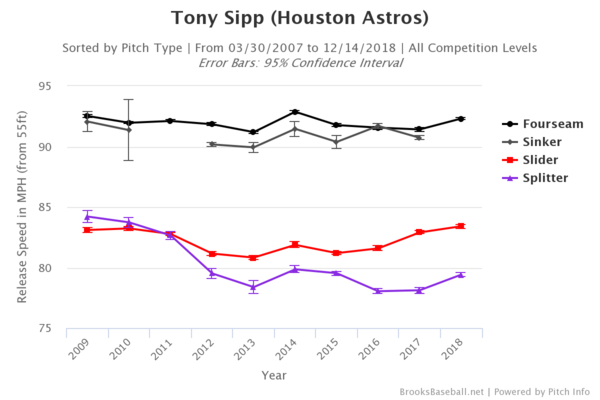
There haven’t been many trade involving one year of a left-handed platoon-ish DH in recent years, so we don’t have many comparables. Arizona acquired their shortstop of the future in Gregorious but they still need a long-term third base answer, though they’re unlikely to get that type of player back for Kubel. For Upton? Sure. But not Kubel. The hard-throwing but erratic Tony Sipp is their only lefty reliever, so maybe the eminently tradeable Boone Logan and a solid (but not elite) prospect would work for the D’Backs. I didn’t like the idea of Kubel as a everyday right fielder, but he sure does fit New York’s need as a left-handed DH.

Categories : Hot Stove League
Comments (73)

(Jonathan Daniel/Getty)

The Yankees have imported a lot of former Red Sox players through the years, including a bunch of guys were on the decline and in the twilight of their careers. Roger Clemens, Johnny Damon, and Wade Boggs jump to mind and that’s just during my lifetime. All three helped New York to a World Championship and proved they had more in the tank than Boston seemed to believe.

Thanks to Alex Rodriguez‘s latest hip surgery, the Yankees now have their eyes on another former Red Sox player, corner infielder Kevin Youkilis. Brian Cashman confirmed meeting with the 33-year-old’s representatives during the Winter Meetings earlier this week, and earlier this morning we learned the team offered him a one-year deal worth $12M. The Indians are also said to be in the mix, and the Terry Francona factor should not be overlooked. I’m sure a number of other unknown clubs are as well. With the Yankees in rather desperate need of third base help, let’s see what Youkilis has to offer.

The Pros

  • Youkilis is one year removed from a .258/.373/.459 (126 wRC+) performance with the bat. He punished left-handers to the tune of .275/.386/.492 (135 wRC+) this year and .323/.436/.598 (174 wRC+) over the last three seasons. No player in baseball has been more productive against southpaws since 2010.
  • By know you know about the whole Greek God of Walks thing, and Youkilis has drawn a free pass in 12.1% of his plate appearances over the last three years (10.0% in 2012). He’s seen an average of 4.27 pitches per plate appearances since 2010, which is among the highest rates in baseball.
  • Youkilis offers some versatility, having started 220 games at third and 116 games at first over the last three seasons. The various defensive metrics says he’s about average at both positions, down from his Gold Glove days a few years ago.
  • This goes without saying, but Youkilis has plenty of experience in big games and in those brutal late-season AL East matchups. He’s played in the postseason, done the Yankees-Red Sox thing, the whole nine. The whole idea of being able to handle New York is a non-issue.
  • Youkilis was not eligible for a qualifying offer because he was traded at midseason, so it will not require surrendering a draft pick to sign him.

The Cons

  • Although he destroys lefties, Youkilis hit just .220/.316/.377 (89 wRC+) against righties this year and .242/.346/.424 (109 wRC+) over the last three years. Just look at his year-to-year graphs page and you’ll see that he’s steadily declining in every significant offensive category. Batting average, walk rate, strikeout rate, power numbers, everything is going in the wrong direction. His ground ball rate has been higher than his fly ball rate in recent years, which is a classic symptom is an aging hitter losing bat speed.
  • Youkilis isn’t exactly an iron man, and in fact he’s played in fewer games over the last three seasons (344) than A-Rod (358). He’s been on the DL five times in the last four years, including a lengthy stint for thumb surgery and multiple stints for back strains. The injuries have his defense on the decline just like his offense.
  • I hate his face and his whiny act at the plate. Every called strike makes him look like Rasheed Wallace getting fouled. Not sure where they keep these stats on FanGraphs, sorry.

Youkilis didn’t become a full-time big leaguer until his age 27 season, but he’s had a very classic career arc. He started out pretty well and continuously improved until peaking at age 29-30, then he gradually started to decline at age 31. Injuries have set in as well. All the tell-tale signs for age-related decline are there, from the plate discipline numbers to the batted ball profile to the just the overall production. It’s all there and spelled out in plain English.

Now does that mean Youkilis is a bad player? Of course not, it just means he’s on the decline and he’s not what he once was. The same was true of Clemens and Boggs and Damon once upon a time as well. The question is how much does Youkilis have left in the tank, and is it worthwhile for the Yankees to pursue him as a third base fill in for A-Rod? I worry about the sharp increase in strikeout rate and increasingly poor production about righties, plus the fact that he’s a dead pull right-handed batter in a stadium unkind to those types of hitters. He could be left on the short-end of the platoon stick as soon as this year. Youkilis is an okay player whose worth is inflated by his status as a former Red Sox.

Categories : Hot Stove League
Comments (107)

(Greg Fiume/Getty)

The offseason dynamic has changed quite a bit for the Yankees over the last 24 hours. They went from trying to dig up a utility infielder who could play 100 combined games between short and third next season to absolutely needing an infielder because Alex Rodriguez will have another hip surgery next month. The injury creates two holes as the Yankees lost their starting third baseman and primary source of right-handed power for potentially the entire first half.

The free agent market is light on quality third basemen and the trade market isn’t much better, so the Yankees are stuck picking from imperfect solutions. We know they don’t consider Kevin Youkilis, Placido Polanco, Ty Wigginton, and Marco Scutaro everyday options at the hot corner, narrowing the field of potential options even further. There’s always Eric Chavez, who played very well last season but doesn’t solve the right-handed power problem and is far from a safe bet to remain healthy. Eduardo Nunez is not an option and playing Jayson Nix everyday has Cody Ransom 2.0 written all over it.

The best free agent option may be a player who wasn’t even a free agent five days ago. The Orioles non-tendered Mark Reynolds last Friday after first declining his $11M club option for 2013. He remained under team control as an arbitration-eligible player, but the club decided to cut ties rather than pay a projected $8.9M salary. At 29 years old, Reynolds is one of the few free agents on the right side of 30. Let’s see if the former Diamondback is a fit for New York’s new needs.

The Pros

  • Reynolds has some of the biggest right-handed power in the game. He joins Albert Pujols, Miguel Cabrera, and Ryan Braun as the only righties to hit at least 23 homers in each of the last five seasons, and over the last three years he owns 92 homers and a .236 ISO. Those rank 12th and 14th in baseball regardless of handedness. Yankee Stadium usually doesn’t mix well with dead pull right-handed hitters, but Reynolds has the kind of power that will play anywhere.
  • In addition to that power comes a whole lot of patience. Reynolds has drawn at least 70 walks in four straight seasons and his 13.2% walk rate over the last three years is the 14th highest in baseball. His average of 4.26 pitches per plate appearances since 2010 is Nick Swisher, Joe Mauer, and Youkilis territory.
  • Guys like Reynolds are easy to typecast as platoon bats, but over the last three seasons he’s posted a .238 ISO with a 116 wRC+ against lefties to go along with a .236 ISO and 104 wRC+ against righties. He can play against everyone.
  • Reynolds has been on the DL once as a big leaguer, missing a little more than two weeks with an oblique strain this season. Prior to that he had been good for 145-155 games played per year every year.

The Cons

  • All of that power and patience comes with a lot of strikeouts. Like a historic amount of strikeouts. Reynolds holds three of the five highest single-season strikeout totals in baseball history and has whiffed in 32.3% of his plate appearances over the last three years. Only Adam Dunn has been worse. If there’s anything good to note here, it’s that his strikeout rate has declined in each of the last two seasons, relatively speaking.
  • Reynolds is a big time fly ball hitter (36.1% grounders since 2010), hence the power production, but fly balls also turn into outs rather easily. As a result, he owns a meager .268 BABIP and .213 AVG over the last three years. Over the last two seasons it’s a more palatable but still awful .221.
  • His best position is probably DH, though he has shown the ability to fake first base these last two years. The various defensive stats rate Reynolds as well-below-average at the hot corner, as in 10 runs or more below-average annually. That’s Johnny Damon in left field bad.

Reynolds has the kind of power and patience the Yankees crave, and the fact that he swings from the right side and doesn’t need a platoon partner fits well with a lineup that is all but devoid of right-handed threats at the moment. He doesn’t hit for average though, which is a problem. A team can live with one low-average, high-walks, high-power hitter in the lineup, but the Yankees already have Curtis Granderson on the roster and squeezing two hitters like that into the regular lineup is less than ideal. Then again, the team is listening to offers for Granderson.

Given the dearth of power hitters and corner infielders on the free agent market, I do wonder if some team will step in and offer Reynolds a two-year contract. He figures to sign for less than the $8.9M the Orioles declined to offer him, but given how the market has played out so far I wouldn’t be completely surprised if some team floats a two-year, $12M offer. Something like that. The Yankees are fixated on one-year contracts and two years for a guy like Reynolds isn’t very advisable anyway.

The real question is whether he can actually man the hot corner on a regular enough basis to be a worthwhile pickup. He doesn’t need a traditional right/left platoon partner, but maybe a third base/DH platoon partner. The Yankees could bring back Chavez and have him and Reynolds split the load at the hot corner while the other plays DH on a given day. It sounds great in theory but is much tougher to actually pull off on the field. The Yankees are losing a considerable amount of offense this winter though, and Reynolds is one of the few available players who can make a real impact with the bat thanks to his power. Again, imperfect solutions.

Categories : Hot Stove League
Comments (76)

(Jason Miller/Getty)

The Yankees were dealt a rather significant blow late last week when Russell Martin agreed to a two-year contract with the Pirates. The free agent market is short on starting-caliber catchers and it’s not often those guys get traded either, so replacing Russ will be very difficult. Unfortunately there isn’t much internal help either.

It’s no secret the Indians are in a full-rebuild mode (again), dangling pretty much every useful player on their roster. One of their best players is one of the game’s top young catchers, 26-year-old Carlos Santana. Cleveland originally acquired him from the Dodgers in the Casey Blake trade four years ago, and he made his big league debut a roughly two years later. He just completed his second full big league season. Santana is an excellent young player as I’m sure you know, but let’s break down the specifics of his game.

The Pros

  • Santana hit .252/.365/.420 (120 wRC+) this year and is a career .247/.363/.443 (124 wRC+) hitter in over 1,400 plate appearances. He’s a switch-hitter as well, with a career 118 wRC+ as a left-handed batter and 138 as a righty.
  • In true Yankee fashion, Santana is a power and patience machine. He hit 27 homers a year ago and 45 total in his two full seasons (.193 ISO), second most among all catchers behind Mike Napoli. Santana also owns a stellar 15.4% walk rate (14.9% this year), and over the last two years it’s 14.8%. Only Jose Bautista, Joey Votto, Adam Dunn, and Carlos Pena have drawn free passes at a higher rate since 2011.
  • Despite all those walks and deep counts, Santana’s career strikeout rate is a touch better than league average at 18.0% (16.6% in 2012). His career 78.2% contact rate is basically league average as well, which is pretty good for a guy who works a lot of counts and sees a lot of breaking balls.
  • In addition to catcher, Santana also has over 80 career big league starts at first base and can play the position adequately. The Indians even stuck him in left field for a few innings during a blowout this year, but I wouldn’t get excited over that.
  • The Indians signed Santana to a five-year contract extension worth $21M earlier this year (covering 2012-2016), so a $4.2M average annual value for luxury tax purposes. The deal also includes a club option ($12M or $1.2M buyout) for 2017, so he’s not going to be a free agent anytime soon.

The Cons

  • Santana is not a great hitter for average because he hits a ton of infield pop-ups. More than 5.5% of his career balls in play are infield pop-ups, and while that might not sound like much, it’s the 25th highest rate in baseball over the last three years (min. 1,000 PA). Infield pop-ups are essentially an automatic out, hence his career .271 BABIP and mid-.200s average.
  • He’s not a great defensive catcher at all. Santana led the league in passed balls this year (ten) and is only league-average in terms of throwing out base-stealers (27%). He’s rated in the bottom five of recent pitching framing rankings and in the bottom quarter of 2012 catcher defense rankings.
  • Santana has only started 100+ games behind the plate once: 106 split between High-A and Double-A in 2008. He’s started 88 and 95 games behind the plate the last two years, though it’s important to note that he often plays first base (or DH, point is they don’t take his bat out of the lineup) when he’s not catching, so the Indians have used him behind the plate less frequently than a typical starting backstop.
  • Santana has suffered two major injuries in the last four years, though the torn knee ligaments in 2010 was the result of the collision at the plate. He also broke the hamate bone in his right wrist in 2009 while playing winter ball. A foul ball off the mask sent him to the 7-day concussion DL last year. Two of those injuries are fluky, but injuries are injuries.

If the Yankees wanted to swing a massive multi-player blockbuster to address most (or all) of their needs all at once, the Indians match up well as a trade partner. In addition to a catcher in Santana they could offer a right fielder (Shin-Soo Choo), a starting pitcher (Justin Masterson), a late-inning reliever (Chris Perez), a high-end infielder (Asdrubal Cabrera), and a low-end utility infielder (Mike Aviles or Jason Donald). Obviously it’s extremely unlikely the Yankees would acquire (or even look to acquire) all seven of those players at once, but the point is there’s potential to expand a deal.

Santana would fill several long-term needs for the Yankees. He’d obviously give them a replacement for Martin, but more importantly he would add power from the right side and another legitimate middle of the order bat to the lineup. With Nick Swisher gone and both Mark Teixeira and Alex Rodriguez in the middle of multi-year fades, finding another three- or four-hole type of hitter to complement Robinson Cano is more important than maybe the Yankees want to admit. There’s an awful lot to like about adding Santana to the Yankees, at least on the offensive side of the ball.

A player like this  — a proven above-average switch-hitter who can at least fake a premium position and is both signed dirt cheap long-term and is several years away from his 30th birthday — has substantial trade value. I’m not normally one to throw comps around, but Santana sure has a lot of Jorge Posada in him, no? Obviously he’s not nearly as accomplished as Posada, but a switch-hitting catcher with power and patience who kinda sucks behind the plate? Yep, that’s Jorge. I’m not sure if the Yankees have the pieces to land a player of Santana’s caliber via trade — the Indians are reportedly looking for young pitching and David Phelps & Ivan Nova duo ain’t gonna cut it — and there’s no indication that he’s even available, but with Cleveland shopping everyone it sure wouldn’t hurt to ask.

Categories : Hot Stove League
Comments (44)

(Jeff Zelevansky/Getty)

Regardless of how the Yankees replace Nick Swisher in right field this winter, they’re going to need to bring in a right-handed outfield bat. Brett Gardner and Curtis Granderson are both left-handed and you can make a case either guy needs a platoon partner, plus the club has to replace some of the righty power they’re losing as Alex Rodriguez ages and Swisher (and potentially Russell Martin) heads elsewhere.

About two weeks ago we learned the Yankees “continue to have conversations” with free agent outfielder Scott Hairston, the younger brother of former Yankee Jerry Hairston Jr. The 32-year-old Scott is coming off a career year with the Mets (.263/.299/.504, 118 wRC+) and is well-known for his ability to pound left-handed pitching. Just ask Gio Gonzalez or Cole Hamels or Cliff Lee or Hamels again, they’ll tell you. Let’s see if Jerry’s little brother is a fit for the outfield-needy Yankees.

The Pros

  • Hairston will be paid to hit lefties, and he does it very well. He produced a .286/.317/.550 (135 wRC+) batting line against southpaws this year and a .263/.308/.464 (110 wRC+) batting line over the last three years.
  • Although he is known as a platoon player, Hairston can at least hold his own against righties. He hit .239/.281/.457 (100 wRC+) against them this year and .218/.289/.420 (96 wRC+) over the last three years. You can live with that from a fourth outfielder.
  • Hairston came up as an infielder but has since moved to the outfield full time, and the various metrics rate him as an average defender in left and a tick below (but still playable in a pinch) in center.
  • It’s not a big part of his game, but Hairston can steal the occasional base. He swiped eight bags in ten tries this year and 15 in 19 tries over the last three years. He’s also about average when it comes to taking the extra base.
  • Hairston obviously has some experience playing in New York given his two years with the Mets, plus they did not make him a qualifying offer. He won’t require draft pick compensation to sign.

The Cons

  • If he doesn’t get a hit, he’s not going to reach base. Hairston is a hacker who walked in just 4.8% of his plate appearances this year and 6.9% over the last three years. He’s consistently swung at ~30% of the pitches seen outside of the strike zone, leading to a below-average strikeout rate (21.2% since 2010).
  • Hairston has been on the DL seven times since making his debut in 2004, including once a year from 2005 through 2011. Most of the injuries were various strains (oblique, hamstring, quad, etc.), but he did have some more serious shoulder problems earlier in his career. He did avoid injury this year, however.
  • He’s limited to left because he can’t throw to save his life — this little rainbow is about the best you’re going to get from his arm. Maybe the early-career shoulder problems are to blame. Hairston only has about 446.1 career innings in right field.

Jonny Gomes did Hairston a favor by signing a two-year, $10M contract with the Red Sox and setting the market for right-handed platoon outfielders. The Yankees are looking to get under the $189M luxury tax threshold by 2014, so therefore any multi-year contract has to be viewed through the prism of average annual value and its impact on next year’s payroll limit. Assuming he signs a contract similar to Gomes, Hairston will be a very pricy fourth outfielder at $4-5M annually.

I liked the younger Hairston quite a bit two years ago, when the Yankees opted to instead sign Andruw Jones to serve as their left-handed pitching masher. Jones worked out wonderfully in 2011 but didn’t help at all this season. We’ve gathered some more data on Hairston these last two years and I do worry quite a bit about his complete reliance on power. If he stops hitting the ball out of the park, he’ll be useless offensively because he never walks and only hits for a decent average. Jones, for example, still drew more walks than Hairston this year (28-19) in 108 fewer plate appearances. Imagine second half Andruw without the walks, and that’s what you’re getting from Hairston when the bat speed starts to slip.

With Gomes signed and Reed Johnson slipping with age, the free agent outfield market is devoid of quality right-handed platoon bats. I’d love to think Brian Cashman & Co. could get Hairston to sign a one-year contract like they have so many veterans the last few years, but he’s been a fringe roster player for most of his career and he’s coming off the best season of his life, so I have to think he’ll look to parlay that into the biggest payday possible. Hairston makes a ton of sense for the Yankees, but he’s a risky (and limited) player who will command multiple years as a free agent.

Categories : Hot Stove League
Comments (42)

(Denis Poroy/Getty)

Plugging the right field hole left by the eventually departed Nick Swisher is going to be one of the Yankees’ biggest challenges this winter, especially given their self-inflicted payroll cap heading into next season. Top free agents like Hamilton, Michael Bourn, B.J. Upton, and even Swisher would look wonderful in pinstripes next year, but the team is unlikely to spend the kind of dough required to reel them in. They’ll instead mine the bargain bin.

One free agent outfielder whose stock is down coming off a subpar year is Shane Victorino, who will turn 32 in a little more than a week. The rebuilding-ish Phillies traded him to the Dodgers at the deadline, but he only hit .245/.316/.351 (88 wRC+) in 235 plate appearances with Los Angeles to close out the season. By late-September he was losing playing time to former Yankee Juan Rivera, among others. Victorino is just one year removed from a 13th place finish in the MVP voting though, so let’s see if he has enough left in the tank to help the Yankees.

The Pros

  • Just a .255/.321/.383 (94 wRC+) hitter in 2012, Victorino is one year removed from a .279/.355/.491 (133 wRC+) effort. He owns a 109 wRC+ over the last three seasons and crushes left-handers: .323/.388/.518 (148 wRC+) in this year and .318/.396/.550 (157 wRC+) since 2010.
  • Victorino definitely qualifies as a contact hitter, striking out just 12.0% of the time this season and 11.7% of the time over the last three seasons. His contact rates (86.8% in 2012 and 86.7% since 2010) are strong as well.
  • You’re going to get some walks in addition to that contact as well. He walked in 8.0% of his plate appearances this year and 8.5% since 2010, which is basically league average. Many contact guys are hackers, but not Victorino. He also stole 39 bases this year (87% success rate) and has topped 25 steals five times in the last six years.
  • Victorino remains a strong defensive outfielder, doing his best work in the corners even though he’s more than capable of playing center. His throwing arm isn’t the strongest in the world, but he gets rid of the ball quick and is pretty accurate.
  • For what it’s worth, Victorino plays really hard and that’s always pleasing to the eye. He also has plenty of pennant race and postseason experience given his time with the Phillies.
  • Because he was traded at midseason, the Dodgers could not make Victorino a qualifying offer and thus he won’t require draft pick compensation to sign. I doubt they would have offered anyway.

The Cons

  • Obviously Victorino’s offense took a step back this season, and his struggles come exclusively against right-handers. He hit just .229/.296/.333 (73 wRC+) against righties this year and .244/.311/.390 (91 wRC+) since 2010.
  • Although he avoided the disabled list this season, Victorino has been on the DL three times in the last three years and four times in the last five years. They were all minor strains (thumb, oblique, thigh, calf), but he tends to get banged up by playing so hard. Call it Slade Heathcott Syndrome.

The Pros greatly outweigh the Cons, but the inability to hit right-handers is pretty significant. He can’t hit righties despite being a switch-hitter, meaning he’d be relegated to the short end of the platoon stick. Perhaps the friendly right field porch in Yankee Stadium improves his output from the left side of the plate, but he’s not a big fly ball guy to begin with. He’s a line drive/ground ball guy who uses his speed to reach base. Being unable to hit righties is a pretty huge negative.

We haven’t even reached the Winter Meetings yet, and already we’ve seen two good but flawed outfielders since lucrative multi-year contracts. Torii Hunter landed two guaranteed years from the Tigers despite being 37 years old while Melky Cabrera received two years from the Blue Jays coming off a PED-related suspension. The market is flush with cash and teams seem willing to give that extra year to get their man. The Yankees, however, are fixated on one-year contracts in an effort to get under the luxury tax threshold in 2014.

That commitment to one-year deals hurts their chances to sign Victorino, who will presumably get offered starter money (and playing time) at some point this offseason. He would be the absolute perfect platoon guy/fourth outfielder for New York though given his ability to mash lefties, play all three outfield spots, run, and make contact. The Yankees have had success getting veteran players to take on reduced roles on one-year contracts in recent years, but Victorino strikes me as too young for that. I’d love to see them grab him as an Andruw Jones replacement on a one-year deal, even if they wind up paying him like $8M, but I have a hard time seeing those terms working for the player.

Categories : Hot Stove League
Comments (68)

(Mike Ehrmann/Getty)

Two days ago the Marlins and Blue Jays pulled off one of the biggest trades we’ve seen in years, at least in the terms of the number of players involved. A dozen players will change teams once this thing is complete, and five of them are veteran guys going from Miami to Toronto. The Marlins certainly acquired some really good young players, but the move was primarily a salary dump on their part.

Unsurprisingly, reports surfaced yesterday that both right-hander Ricky Nolasco and first baseman/outfielder Logan Morrison are on the trade block as well. The Yankees supposedly have interest in Nolasco, but let’s put him aside and focus on Morrison. The 25-year-old left-handed hitter is just three years removed from being one of baseball’s very prospects thanks mostly to his offensive prowess. Baseball America twice ranked him as one of the game’s 20 best prospects (#18 in 2009 and #20 in 2010), placing him just behind Giancarlo Stanton in both instances. Obviously he hasn’t taken off like his teammate, but that doesn’t mean he doesn’t have something to offer. Let’s see if there’s a fit for the Yankees.

The Pros

  • A career .259/.339/.442 (112 wRC+) hitter, Morrison hit .259/.351/.460 (121 wRC+) in 815 plate appearances from 2010-2011. Although he’s done most of his career damage against righties (.205 ISO and 113 wRC+), he hangs in well against lefties as well (.157 ISO and 109 wRC+).
  • Morrison’s strength offensively is his ability to control the strike zone. He drew a ton of walks in the minors (12.4 BB%) and that’s held true in the show (11.0 BB%), plus his strikeout rate (18.2 K%) is basically league average (15.2 K% in the minors). His 82.6% contract rate in the big leagues (career-high 84.1% in 2012) is better than the league average as well.
  • Baseball America said Morrison’s “makeup and leadership skills are outstanding” prior to the 2010 season, the last time he qualified as a prospect. I also recommend reading this Amy Nelson piece on Morrison’s upbringing, which explains how father Tom — a military man who recently passed away due to cancer — preached pride and discipline.
  • Morrison is still in his pre-arbitration years and won’t be eligible for free agency until after the 2016 season. He’ll earn something close to the league minimum in 2013 before being arbitration-eligible for the first time next winter.

The Cons

  • As you probably know, Morrison didn’t hit at all this year: .230/.308/.399 (91 wRC+) in 334 plate appearances. His BABIP has been trending downward while his fly ball rate has been climbing upward since debuting in 2010, so it’s not entirely a fluke. More fly balls equals fewer base hits. There’s a chance he started to sell out for power, and in fact you can kinda see his progression from an all-fields hitter to a pull-happy guy in his spray charts (2010, 2011, 2012).
  • Morrison is no stranger to the disabled list. He had surgery to repair the patellar tendon in his right knee both this September and last December, so this is a repeat thing now. He also missed time with a left foot injury in 2010 and broke his thumb while in the minors back in 2009.
  • Thanks in part to the knee problems, Morrison is a well-below-average baserunner. He’s attempted just five stolen bases as a big leaguer (caught twice) and he’s taken the extra base just 38% of the time. That’s below-average. Nothing in his track record suggests more value on the bases is coming even if his knee is fine going forward, it’s just not his game.
  • He’s been a first baseman his entire life and when the Marlins stuck him in left field in deference to Gaby Sanchez following his call-up, it was a disaster. Morrison’s defensive stats in the outfield (-25.7 UZR, -36 DRS, and -27 Total Zone) are a nightmare, though sample size warnings do apply (2,044.2 innings). He’s considered a solid if not above-average defender at first.

Any team that looks into acquiring Morrison has to first thoroughly check out his medicals, then ask themselves if they think he’s fixable offensively. Has he turned himself into Mark Teixeira in the sense that he’s now unable to go the other way and can only pull the ball? The Yankees don’t have a good track record of turning pull-happy guys into all-fields hitters, in fact it’s quite the opposite. Their guys do the opposite. Maybe that will make Morrison more appealing to them, who knows. We also have to remember that batted ball data isn’t very reliable, so don’t take the increase in fly balls to heart.

The left-handed power (which would be heightened by Yankee Stadium, in theory) and patience is appealing, especially since he’s more than a platoon bat. The problem is that Morrison wouldn’t have a position with the Yankees unless they are willing to tolerate terrible defense in a corner outfield spot. They did it with Johnny Damon and Bobby Abreu in recent years and Raul Ibanez just this past year, so who knows. I suppose he could serve as the regular DH, backup first baseman, and part-time outfielder (whenever a ground ball pitcher is on the mound?). That might work. It’s probably best to think of him as an Ibanez replacement rather than a Nick Swisher replacement.

Morrison is a buy-low candidate in the Swisher mold, which is kinda funny since both guys had their worst full season as a big leaguer in their only season under Ozzie Guillen. Morrison’s red flags are more serious than Swisher’s were back in 2008 considering the knee problems, however. I think it’s safe to assume the Marlins are seeking prospects in return, and I guess there’s a chance they’d look to package him with Nolasco a la Josh Beckett and Mike Lowell. If the Yankees could swing a deal involving two or three prospects — preferably not from the Mason Williams, Slade Heathcott, and Gary Sanchez trio — Morrison might be their best chance of landing a young impact bat while his value is down.

Categories : Hot Stove League
Comments (45)