Archive for Business of Baseball

May
17

A franchise at a crossroads

Posted by: Benjamin Kabak | Comments (29)

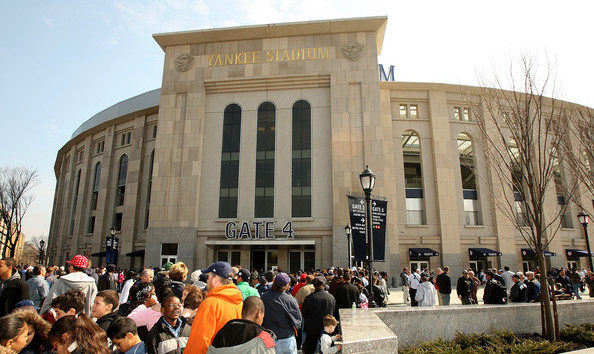
Over the last few years with the rise of the new Stadium and the fall of George Steinbrenner, we’ve written a lot about the Yanks’ current upper management structure. Between George’s declining health and the Jennifer Steinbrenner/Steve Swindal divorce, the Yanks went enjoying a solid leadership to suffering through a few years of turmoil.

Right now, Hal Steinbrenner appears to be the one with the power, and he shares it with his brother Hank. Helping him out — and seemingly taking the PR fall — are Randy Levine and Lonn Trost. Late this week, we learned that Trost and Levine may be working on borrowed time. With the team facing a lot of criticism for the way it has handled aspects of the new stadium, the Steinbrenners may look to assert their power and shore up public support.

All of these behind-the-scenes machinations are simply reminders of the unilateral power George Steinbrenner held. Earlier this week, Wayne G. McDonnell, Jr, a contributor to Maury Brown’s Biz of Business and a professor of sports management at NYU, opined on the Yankees. Is this, he wondered, an organization in transition or one being mismanaged?

There is no denying that the New York Yankees have had an awkward and inauspicious beginning to the post George Steinbrenner era both on and off the field. Whether it is selling grossly overpriced stadium memorabilia to the masses or engaging in a war of words with the commissioner of Major League Soccer, the new leaders of the Yankees have already encountered countless obstacles. While the new ball park is extraordinary and surprisingly captures the essence of the old Yankee Stadium, the pricing model is flawed and needs substantial revision to reflect the current market conditions. The Yankees’ overtly aggressive pursuit of the white collar audience is alarming since this type of customer is quickly becoming extinct.

What’s even more disheartening is that the throngs of fiscally challenged Yankee fans have to actively survey the secondary ticket market for affordability instead of desired seat locations. Season ticket holders are now starting to feel the pinch of the prices at the new ball park and they are expeditiously liquidating their ticket inventories at discounts. To put it simply, customers are paying premium prices for a pedestrian product. The constant dependence on the free agent market has been a detriment to the organization. Even though the Yankees have spent almost a half a billion dollars on three ball players this past offseason, they are still mired in mediocrity and struggling with the implementation of cutting edge ideas regarding player development. Fans are paying prices fitting for a team like the 1998 Yankees. Instead, they are receiving the 2008 version…

The new ownership group of the Yankees has made a few gaffes. But, it is not their fault that the economy has imploded and we are now living in a world of unforeseen disarray. Unfortunately, they are a victim of bad timing. Just like our economy, the New York Yankees are trying to learn how to conduct business in an effective and efficient manner. However, they also have to learn how to accommodate baseball fans and make each person who walks through the turn stile feel valuable and important. Only time will tell if the New York Yankees are ready to compete in a world of economic uncertainty or will they adhere to their irrational ideals and principles.

While I’ve been critical of the Yankees’ decisions and many of their public statements, McDonnell is right to question the economics of it and the state of the organization. The Yankees are engaged in what is basically a case study of sports economics. How far can a team push the envelope and still maintain its fan base, its revenue base and its identity? We don’t have yet the answers, but it’s something to ponder on a Sunday morning.

Categories : Front Office
Comments (29)

Despite a bad economy, the Yankees are still worth a pretty penny. (Graph via The Biz of Baseball)

It’s good to be rich, and in the world of baseball, no one has the potential to be as rich as the Yankees.

Forbes, everyone’s favorite money magazine, released their annual valuation of baseball teams this week, and unsurprisingly, the Yankees are at the top of the list. According to Forbes, with the revenue from the wildly successful YES Network and a new state-of-the-art stadium, the team is now worth $1.5 billion, nearly $600 million more than the Mets, baseball’s second most valuable team.

The Yankees dominate the list nearly across the board. In addition to the $1.5 billion valuation, the team saw their market value increase by 15 percent over 2008. It is by far the largest increase among baseball teams, and as ten teams saw their value decline, the Yanks’ increase and the Mets’ 11 percent jump are largely responsible for the overall one percent increase in the value of baseball teams.

The Yanks also draw in $375 million in operating revenue, and while their net income is in the red at -$3.7 million, the Yankees entity is profitable due to the rest of their holdings. That negative number is due to revenue sharing, and while it probably won’t turn significantly positive, that money won’t be going to fund other teams in the short term.

In what is by far the clearest explanation of the revenue sharing process, Forbes’ writers Michael K. Ozanian and Kurt Badenhausen break down the Yanks’ net negative income:

The new stadium also means the Yankees will have to hand over a lower percentage of their revenue to rivals. Yes, the team’s stadium revenue–tickets, suites, advertising, concessions–is likely to go up by more than $100 million this season.

But MLB permits teams to deduct stadium-operating and debt expenses from revenue before calculating the amount the league will take from them to subsidize other teams. Last season the Yankees had to hand over $95 million to the league so it could be distributed to teams like the Florida Marlins, Pittsburgh Pirates, Kansas City Royals and Tampa Bay Rays. In the new stadium the Yankees’ deductible expenses will be around $100 million, enough to wipe out the windfall in revenue.

Meanwhile, the strangest list is the one of teams by operating income. This is the only iteration not topped by the Yankees, but the Yankees fund this list. As Maury Brown makes abundantly clear in his write-up of the Forbes list, the Marlins are atop this list because Jeffrey Loria is basically pocketing the money. “With a slap to the face of the revenue-sharing system, and a clear sign that Jeffery Loria loves living on welfare, he has now officially gotten the Marlins for free,” Brown notes. The Forbes article says that Loria has received more money in revenue sharing payments than he had to pay out to buy the team.

On the bottom of that list, meanwhile, is Detroit. The Tigers play in one of the areas hardest hit by the current economic crisis, and it’s clearly impacting their bottom line. It will be interesting to see how this list shapes up over the next few years. Baseball is holding steady thanks to the strength of the top of the list, but if more teams see their income and value slip, the sport will have to reassess its economics.

After the jump, some lists.

Read More→

Categories : News
Comments (16)

Maury Brown as the Biz of Baseball has Opening Day payroll totals for all 30 teams. The Yanks lead the pack with an Opening Day payroll of $201 million, a decline of about $8 million from 2008. The Mets ($149 million), Cubs ($134 million), Red Sox ($121 million) and Tigers ($115 million) round out the top five. Overall, Opening Day spending is down by about $43 million this year over last with the Padres’ 40 percent payroll reduction accounting for the bulk of that figure. As always, good stuff from Maury.

Categories : Asides, News
Comments (7)

Take a walk around the new Yankee Stadium, and you will be struck by the sponsors. Everything — every sign, every activity, every strike out (P.C. Richard), every stolen base (Modell’s) — has an official sponsor. In an effort to get to the bottom of this sponsorship glut, Darren Rovell has put together a guide to all of the Yanks’ (and Mets’) official sponsors.

After the jump, we’ve got the full list. The asterisks signify non-exclusive deals. The Yanks could have two Official Consumer Electronics Companies this year if they could find another one. While the Yanks’ marketing guys sure have been working overtime for this one, I’m particularly amused by the fact that the Mets’ Official Financial Services Provider is Citi. That’s aiming for the stars.

Read More→

Categories : Yankee Stadium
Comments (40)

In a bad economy, superfluous expenditures — such as baseball tickets — often suffer. As the U.S. economy tries to right its floundering ship, baseball officials are predicting a six percent decline in attendance for the upcoming 2009 season. Officials see a lot of enthusiasm surrounding the game, and WBC ticket sales shattered the 2006 numbers. Baseball’s leaders are also counting on new stadiums from the Mets and Yankees to stave off a steeper decline. There is, of course, a rub.

Last year at Shea Stadium, the Mets averaged just over 51,000 fans a game. This year, they’re playing in CitiField, a ballpark with a capacity of just 42,000. Even if they sell out every game — and early indications are that they will not — the Mets alone will be responsible for a one percent dip in baseball attendance. Who decided that building such a small stadium in New York City was a good idea anyway?

Comments (49)

The Yankees and Audi have announced that the German auto manufacturer will be the Official Luxury Vehicle of the New York Yankees. In what sounds like something of a corporate naming joke, the car company will sponsor the Audi Yankees Club, a member’s only restaurant on the H&R Block Suite Level in left field. The financial terms of the deal were not announced, but expect logos throughout the stadium and Audis in Babe Ruth Plaza on select dates. I wonder if any of the Audis come equipped with a panoramic vista roof.

Categories : Asides, Yankee Stadium
Comments (5)

In South Jersey, a giant bluegrass field awaits the Yankees. This farm, run by Rick DeLea, is the sole supplier of the grass under the feet of the Yankees at both the new and old stadiums. With the Yanks opening up a new home in a few weeks, DeLea had to outfit the park with a new carpet. He ended up with 10 acres of the sod and reams of extra grass. Now, he has struck a deal with the Yankees to sell Yankee Sod at NYC-area Home Depot stores. The sod will cost $7.50 for a 16-inch by 4-foot square and will come with all of the anti-counterfeiting certifications that the so-called Official Grass of the New York Yankees should carry. Johnny Damon, unfortunately, was not quoted in the article.

Categories : Asides, Yankee Stadium
Comments (11)
Mar
21

Celebrating a new stadium

Posted by: Benjamin Kabak | Comments (17)

utzyankeestadium

The PR folks representing Utz, the ten-year potato chip sponsor of the Yankees, sent along the above image this week. The company is offering up a special new Yankee Stadium edition of their chip bag. It’ll be available at the Stadium this year and throughout the New York area. I’d imagine that just about every company associated with the Yankees will be running similar promos this year. After all, we know that New Era hopped on board that train, and now Utz has too.

Categories : Yankee Stadium
Comments (17)
Mar
10

Assessing the Yankee brand

Posted by: Benjamin Kabak | Comments (60)

I just wrapped up the part of The Yankee Years that Tom Verducci and Joe Torre call the last moment of Yankee magic at the old Stadium. With one swing, the much-maligned Aaron Boone delivered a stunning end to one of the most dramatic playoff series of all time.

Since then though, the Yanks have suffered through five seasons of bad luck, on and off of the field: Jason Giambi’s tumor, the 2004 playoff collapse, the Mitchell Report, the dismissal of Joe Torre, A-Rod’s PED scandal, the bad PR over the season-ticket problems with the new stadium and the political scandals that have lurked around the edges of the new stadium as well. Some of these stories are driven by a media that is highly skeptical of the Yanks and their ways. Others constitute legitimately bad news.

To the end, in a must-read piece, Pete Toms, one of the authors at The Biz of Baseball, ponders the state of the Yankee brand. Is the Yanks’ brand a tarnished one? The Yanks, Toms believe, are overreaching at a time when the American people are economically weak, and the team may be out of step with its fans:

Of more importance to the Yankees than the admonishments of local politicians is the widespread anti Yankee sentiment amongst rank and file fans. Instead of excitement about the new stadium and free agent signings, Yankee blogs, message boards and newspaper reports are rife with the comments of angry fans expressing their outrage over how and where their seats have been “relocated” in the new stadium…The negative impact of the recession on the Yankees is not limited to diminished demand for expensive seats. The credit crisis increased the stadium construction borrowing costs. Bloomberg reported on how changes in the municipal bond market affected the Yankees second round of financing. “The New York Yankees sold $259 million of bonds at yields two to three percentage points higher than the baseball team’s first round of city-approved tax-exempt financing to finish its new stadium in the Bronx…”

On the field, the Yankee brand has been tarnished (rightly or wrongly) by A Rod. A Rod’s $300 million dollar contract was justifiable for the Yankees because of two reasons. 1. He would sell out tickets and luxury boxes at the new stadium during his pursuit of the HR record. AND he would do it as a “clean” player. In short, he would be the next Yankee icon. 2. The same pursuit would be of great value to YES. Again, somehow that seems a long time ago. Now the Yankees have hundreds of millions of dollars committed to an unpopular superstar who they can never portray as “good” to Bonds “evil”. Serious questions surround his long term health, particularly minus PEDs which have been credited with contributing to the extraordinary success of some superstar players at relatively advanced ages (Bonds, Clemens). Subsequent to the announcement of A Rod’s injury, some pundits are suggesting that the loss of the Yankees premier player and arguably MLB’s best player is actually a positive..

In the short term, winning is marketing. Much of the complaining about seat relocations, public handouts to billionaires paying millionaires and a cheating superstar, can be overlooked if the Yankees win. But as defined by Yankee fans, winning means winning it all. Long term, is what the Yankees are selling out of step with the zeitgeist? Tom Van Riper wonders, “Sure, the economic slump will only last so long, but some experts think the shock and suddenness of the global financial crisis may have shifted consumer attitudes permanently. For all but the wealthiest, the luxury sports experience could be out for a long time. That means a lot of $1,000 tickets and personal seat licenses could go unsold and unpopulated for a very long time.” That, not A-Rod, is the Yankees’ biggest problem.

The problem Toms identifies is part of the Yankee Catch-22. The team has become a brand because they won so often in the late 1990s. In order to continue winning, they started spending. In order to keep up the spending, they need more money. To get more money, they started a cable network and built a state-of-the-art stadium. To fill that stadium, they need to get prices at the right level, and they need to win.

Along the way, the team has hit a few speed bumps and larger roadblocks, but I think Toms nails it when he boils it down to winning. Non-Yankee fans may scorn and despise the Yanks, but they still turn out on the road to watch the Yankee brand play. If the team wins, if they get over this PR hump of the ticket problems — a PR problem about which most fans are antipathetic or ignorant — the brand is as strong as ever.

Those of us that put the Yanks under a microscope on a daily basis may see the last few years as part of a bad cycle for the team. However, as the stadium opens, as YES draws record ratings for Spring Training games, the Yankees and their brand are not suffering.

Categories : Analysis
Comments (60)

As Opening Day draws near and the Yanks still haven’t sold out their new $2 billion playground, ticket pricing on both the political and economic sides of the issue has creeped back into the news.

In reverse order, we start with a Richard Sandomir piece in today’s Times. The Yankees are a bit concerned about the number of unsold premium seats. The Yanks are taking out ads in all of the city’s major papers and are generally finding it tough to fill seats that cost a few hundreds a game for 81 games.

Sandomir also relates more tales of woe from the fans, and we at River Ave. Blues received our own story this week. Writes a reader who will remain anonymous:

I have read in your blog and others how the Yankee ticket office has treated past season ticket holders pretty bad. Well you can add prospective season ticket holders that put down $1,065.00 deposit for the full 81 games back in early December. I checked with the Yankees in Dec. and was told it would be January before I heard. At the end of January I was told it would be the end of February. Now at the beginning of March I spoke to a very rude person in the Yankee ticket office that said that I would not hear until the end of March. That is, if they have anything at all to offer. But “don’t worry,” you won’t lose any money. I was told that I could have my deposit back or just leave it with them as a down payment for the 2010 season. Like I’m going to do that.

As companies these days face debates over customer service, the Yanks are intent on pushing an old maxim — the customer is always right — to its limits. While in a good economy, the Yanks would have filled their premium seats with high-rolling financial clients and the like, in a bad economy, the team and their customer service reps just come off looking bitter.

That said, what Richard Brodsky is proposing is rather preposterous. While I’ve supported Brodsky in his efforts to get to the bottom of the sketchy accounting surrounding the land underneath the new Yankee Stadium, his latest clash with the Yanks is a bit extreme. On Friday, Randy Levin and Brodsky clashed horns over the Assembly representative’s desires for price-controlled tickets in publicly-funded stadiums. Reports Bloomberg News:

New York Yankees President Randy Levine said he opposes state lawmakers’ efforts to dictate prices for tickets sold at sports stadiums built with public support such as the franchise’s new ballpark in the Bronx.

State Assemblyman Brian Kavanagh, a Manhattan Democrat, has introduced a bill requiring that 7 percent of tickets sold to any sporting event carry “affordable prices” as a condition of pro-sports facilities receiving state or local benefits…

“If you’re charging too much, people will not come,” Levine said at an assembly committee hearing today in lower Manhattan. “If we’re not selling enough tickets to pay it back, the responsibility is on us to adjust.”

While the hearings were ostensibly about tax documents and tax-exempt bond financing, Levine and Brodsky were yelling at each other, according to Richard Sandomir’s account.

The problem with Kavanagh’s proposal is that teams already have affordable pricing. As far as sports in New York go, it’s still far cheaper to see a Yankee or Met game than it is to get tickets to a game in the Meadowlands or a Knicks game at the Garden. The economics of baseball and demands of an 81-game schedule preclude overly expensive tickets, and this move seems like the Assembly sticking its nose into something it should just leave alone.

Categories : Yankee Stadium
Comments (18)