Archive for Melky Cabrera

The MLB Players Association yesterday released its list of the 210 players eligible for arbitration. Maury Brown has the full list right here, and five members of the 2009 Yankees find themselves under team control and arbitration-eligible.

Before exploring these players, a few notes on procedures: Salary arbitration is available for players who have not yet reached free agency and players who are free agents. A player with more than three years but fewer than six — with some exceptions for what is known as Super Twos — can file for arbitration. Conversely,the player’s former team can decide to non-tender those players at which point the player becomes an unrestricted free agent.

For current free agents not constrained by service time, clubs can offer salary arbitration to former players by Dec. 1. That move allows the team to recoup draft picks if the player goes elsewhere, but the team runs the risk of an unwanted or overpaid player accepting arbitration and sticking around. The arbitration discussed here is limited by service time and not contractual free agency. And so onto the Yankees.

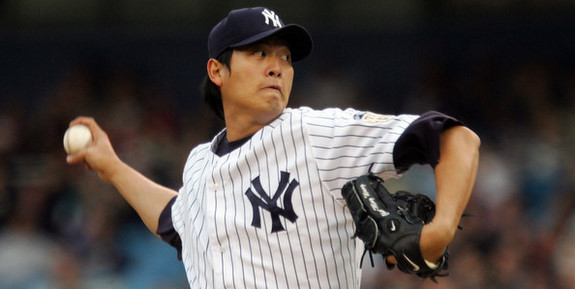
Chien-Ming Wang — Service Time: 4.159 years; 2009 Salary: $5 million
The Yankees and their former ace have a tenuous relationship when it comes to salary disputes. In 2008, Wang lost in arbitration, and the Yankees made a big deal about saving $600,000 in the process. Last year, the two parties settled for $5 million in late December, but it’s clear that the Yankees are skeptical of Wang’s ability and future success. Considering the nature of his surgery and his recent ineffectiveness, they might have a reason for that skepticism.

Early on this off-season, the conversation has centered around Wang’s contract status, and rumors suggest that the Yankees will non-tender him. They could then try to sign him to an incentive-laden deal with a low base salary. Whether this will placate the sinker-ball specialist is up for debate. Some feel the two-time 19-game winner could test the open market; others say that his marketability in Taiwan is dependent upon the pinstripes.
Prediction: The Yanks will non-tender Wang but resign him to an incentive-based deal more favorable to the team.

Brian Bruney — Service Time: 4.164 years; 2009 Salary: $1.25 million
Last year, the Yanks and Bruney avoided arbitration after exchanging salary figures. Bruney wanted $1.55 million; the Yanks countered with $1.1 million; and the two sides nearly split the difference. Bruney had a worse year in 2009 than he did in 2008. He suffered through some early-season elbow problems and saw his walk rate increase while his strike out rate decreased. His ERA jumped over 2.10 runs, but the Yankees want to bring him back.
Prediction: A one-year deal worth approximately $1.7-$2 million.

Melky Cabrera — Service Time: 3.148 years; 2009 Salary: $1.4 million + $25,000 for reaching 525 plate appearances
Unless something drastic happens — Curtis Granderson, Mike Cameron or that long-rumored Melky and Ian Kennedy for [Insert Player Here] trade — Melky will again battle it out with Brett Gardner for the center field job. After putting up bad numbers in 2008, Melky rebounded with a nice 2009 campaign. I would expect the Yanks will settle with Melky but not offer him a long-term deal.
Prediction: One year, $2.5 million

Chad Gaudin — Service Time: 4.163 years; 2009 Salary: $2 million
A mid-season acquisition, Gaudin showed some good stuff while pitching for the Yanks. He’ll be 27 by Opening Day and will be a swing man for the Yanks next year. I doubt the two sides will head to arbitration here, and Gaudin should receive a bump from his $2 million salary.
Prediction: One year, $3-$4 million

Sergio Mitre — Service Time: 4.132 years; 2009 Salary: $1.25 million
Mention “Sergio Mitre” to a Yankee fan and you may find that fan fighting back the urge to scream. Just a year removed from Tommy John Surgery, Mitre was awful for the Yanks. He managed to win three games but sported a 6.79 ERA. Opponents hit .320/.361/.509 off of him. The Yankees hold a $1.25 million option for 2010, and although Mark Feinsand doesn’t expect them to pick it up, I do. For that low price, the Yanks can bolster their depth.
Prediction: One year, $1.25 million

Categories : Hot Stove League
Comments (47)
Nov
11

What Went Right: Gardbrera

Posted by: Mike Axisa | Comments (85)

Over the next week or so, we’ll again break down what went wrong and what went right for the 2009 Yankees. The series this year will be much more enjoyable than the last.

Gardbrera

Mid-way through the 2007 season, it became apparent that Johnny Damon was no longer a viable option in centerfield for the Yankees. The team was somewhat up a creek without a paddle, as Damon still had two-and-a-half years left on his contract, and they had to turn to the unproven Melky Cabrera full-time in one of the most important positions on the field.

In 2008, Yankee centerfielders hit just .261-.320-.391, which represented the fifth lowest OBP and seventh lowest IsoP in the league. Furthermore, the group’s defense didn’t make up for their offense shortcomings, as they posted a collective +1.9 UZR/150. Melky got the lion’s share of the work in center (67.5% of the total innings), but he was demoted to the minors in mid-August after a 300 plate appearance stretch of futility in which he hit .227-.277-.280.

After flirting with various trade scenarios in the offseason, the Yankees came into Spring Training this past February with the same cast of centerfield characters as last year. Most (myself included) figured a mid-season trade for a centerfielder was in order. Instead, both Melky and Brett Gardner excelled in camp (Melky hit .349-.408-.508, Gardner .379-.446-.621), and the Yanks started the season with a somewhat unconventional platoon in the middle outfield spot.

Across the board, the performance in centerfield improved in 2009. The Gardbrera duo (plus a two game cameo from Jerry Hairston Jr.) hit .273-.338-.400, as Melky once again carried most of the load. Not only was the offensive upgrade welcome, but the defense also improved immensely thanks to Gardner. The team’s UZR/150 in center jumped to +7.5, third best in the AL. The league average offense and well-above average defense gave the Yankees the most production out of the centerfield position since Bernie Williams was in his heyday.

Photo Credit: Jim McIsaac, Getty Images

Categories : Analysis
Comments (85)
Nov
05

Melky and A-Rod

Posted by: Joseph Pawlikowski | Comments (4)

How fitting for RAB.

Categories : Playoffs
Comments (4)

A few minutes ago, Joe Girardi revealed that Melky Cabrera suffered a mild strain of his left hamstring during the 6th inning of last night’s game. He will be unavailable for the remainder of the World Series, and the Yankees are working to replace him on the roster, most likely with Freddy Guzman. Official word will come down at 6 p.m., and we’ll update this post accordingly. With Melky out, the Yankees will hand center field over to Brett Gardner this evening, and the Yanks’ lineup will feature a 6-7-8-9 combination tonight of Robinson Cano, Gardner, Jose Molina and A.J. Burnett. On the bright side, the bench is very strong tonight.

Update (5:45 p.m.): The Yankees have announced that Ramiro Peña will take Melky Cabrera’s place on the roster. Peña isn’t as fast as Guzman but provides more versatility both with the bat and in the field. Peña could be asked to bunt tonight as well if the situation calls for it.

Categories : Asides, Playoffs
Comments (81)

In the winter of 2007-2008, when River Ave. Blues was still in its blog infancy, the hot topic of the Hot Stove League was Johan Santana. The Twins were gearing up to trade their lefty ace, and the Yankees were deeply involved in the negotiations.

As the winter dragged on, we staked out a position deemed extreme by many — but not Yanks’ GM Brian Cashman. “Save the Big Three,” we proclaimed, as it became clear that any Johan Santana deal would probably include some combination of Phil Hughes and Ian Kennedy along with other top prospects or Major League contributors. The money, we argued, would be better spent on CC Sabathia a year later when the big man hit free agency. Plus, we reasoned, the Yanks wouldn’t have to pay twice for CC, first in prospects and then in dollars, as they would for Santana.

When all was said and done that winter, our position held the day, but it was not without controversy. Throughout 2008 and even into 2009, a debate raged among Yankee fans over that non-trade, and when the Yanks missed the playoffs in 2008 for the first time since 1994, Cashman and the anti-trade faction received its fair share of criticism.

Yet, last winter, the pieces fell into place. The Yanks landed CC Sabathia, and this year, that signing has paid off in a big way. CC took home MVP honors after the ALCS, and after posting tremendous numbers this season, Sabathia has powered his way through three playoff starts. It’s been wine and roses for the Yanks and CC this year.

With the Yanks gearing up to face the Phillies in the World Series, let’s take a look at how those pieces from the Santana trade are doing. I’m going to assume that the most popular iteration of the trade — Phil Hughes, Ian Kennedy and Melky Cabrera for Johan Santana — would have gotten the deal done. The Yanks probably would have thrown in a fourth lesser prospect as well.

Phil Hughes
Still just 23 years old, Hughes has been one of the most heralded young arms in recent Yankee history. He made his debut in 2007 and threw admirably as one of the youngest starters in the league. His 2008, however, was a complete wash. He started the season 0-4 with an ERA of 9.00 and then missed May, June, July and August with a variety of injuries. By the end of 2008, Yankee fans were wondering about the hype, and many rued not trading Hughes when his stock was high.

This year, though, has been an utter revelation for Yankee fans and Phil Hughes. He made a few spot starts in place of Chien-Ming Wang and flashed some decent stuff, but the youngster really came into his own upon moving into the bullpen. As the 8th inning bridge to Mariano, Hughes went 5-1 with a 1.44 ERA in 44 games. In 51.1 innings, he walked just 13 and struck out 65. He put up a 22.7 RAR and a 2.2 WAR out of the bullpen, and without Hughes in the 8th, the Yanks’ season would have played out much differently.

Melky Cabrera
For Melky, 2008 was a setback. He was the subject of many trade rumors and didn’t play well at all. He hit .249/.301/.341 and lost his starting job to Brett Gardner by early August. This year, though, with increased competition from Gardner, Melky responded in turn. Although he faded a bit down the stretch, Melky hit .274/.336/.416 with a career-best in home runs (13), doubles (28) and OPS+ (97). In the ALCS, he went 9 for 23 with four RBI and three walks. At 25, Melky has 2148 Major League plate appearances under his belt and could yet turn into an adequate offensive outfielder.

Ian Kennedy
Similar to Hughes, Kennedy had a terrible 2008. He also went 0-4 with a gaudy 8.17 ERA and found himself demoted after not pitching poorly. To make matters worse, he flashed an attitude unappreciated by many in New York. This year, he had a strong start at AAA but came down with an aneurysm in his arm. He made a triumphant return to the Majors and threw an inning against Anaheim in mid-September. He is currently throwing in the Arizona Fall League where he has allowed five earned runs in 11.1 innings but has a 13:1 K:BB ratio. He will probably factor into the Yanks’ 2010 plans.

Johan Santana
The centerpiece of the deal landed in New York after all but in Queens and not the Bronx. He has been a bright spot amidst a dismal Mets team. With the Mets, he has gone 29-16 in 59 starts. He has a 2.79 ERA in the NL and has struck 352 while walking 109 in 401 innings. His K/9 IP in the NL is 1.6 strike outs lower than it was in the AL. This season, his velocity started trending downward, and he missed the final six weeks of the season after undergoing surgery to remove bone chips in his arm. The Mets still owe him at least $98.5 million over the next four seasons or $118 million over five.

Late last week, Cashman spoke with John Harper of the Daily News about this very topic. “When we added David Cone from Toronto,” Cashman said “we were a piece away at the time. But when Santana became available, in my opinion we weren’t a piece away yet. So I told ownership, ‘Listen, six months really isn’t a long time to wait – though it turned out to be a long time for me, to be honest – and if we can have the patience and discipline, I can’t guarantee you we’ll be able to get Sabathia, but think about what our organization will look like if we can add him and keep these other assets.’”

And so today, those assets are still in place. The Yankees are playing the World Series with CC Sabathia, Phil Hughes and Melky Cabrera primed to contribute. Although Ian Kennedy hasn’t yet been what we expected and Melky has hit some development roadblocks over the last few years, the Yankees are right where they expected to be when Cashman turned down the Santana offer. I certainly think it’s worked out nicely for them. Do you?

Categories : Analysis
Comments (138)

We’ve all seen this before: Yankees offense scores 900 runs in the regular season, goes to sleep in the playoffs. The difference this year is that some guys are still hitting. That, and the superb pitching allowed even a porous offense to come out ahead in the first five postseason contests. But, as we saw yesterday, the holes in the lineup can be killers. The Yanks could have scored eight, 10 runs yesterday if they hit with runners in scoring position. Instead, they relied on the solo homer. That won’t always work.

That the bottom of the order isn’t hitting is one thing. That Mark Teixeira isn’t hitting is another. He’s had a pretty bad playoffs overall, notching just two hits in the ALDS. Of course, those two hits were as big as they get: a single prior to a game-tying homer, and a walk-off shot in the same game. Since then, in four games, Teixeira has just one hit. He is 1 for 13 in the ALDS with a lone single, walking three times to five strikeouts. It hurts so much more because he’s batting in the three hole.

It’s April all over again for Tex. It appears the long breaks have disrupted his rhythm. That’s anecdotal, of course, but it matches with what we’ve heard about Teixeira from day one. He starts slow every year because he needs to get into a rhythm from both sides of the plate. Joe Morgan (of all people) explained it on a Sunday Night Baseball broadcast, noting that while most hitters transfer their weight from their back foot to their front, Teixeira stays on his back foot for his whole swing. I wonder how much Tex would benefit from having a non-roster pitcher, like Brian Bruney, throw him live BP, at game speeds.

Robinson Cano came to the plate twice yesterday with runners on first and second with none out, and twice bounced into a fielder’s choice. In fact, he doesn’t have a hit with runners in scoring position all series. His only RBI came on a triple with a man on first. He’s just 3 for 13 in the series with a GIDP. The Yankees certainly need the guy who hit .320 this season.

Batting after Cano is Nick Swisher, who has been equally as bad if not worse. After going 1 for 12 in the ALDS, Swisher is 2 for 10 in the ALCS with five strikeouts. A few of those have been costly, coming with a runner on third and less than two outs. Swisher’s woes at the plate are amplified when A.J. Burnett starts. Because Jose Molina bats ninth and Jorge Posada is out of the lineup, Swisher hits sixth. Unless he does something tonight, putting him in that spot isn’t the best idea.

Rounding out the order is Melky Cabrera who, after a good Game 1, has slowed down considerably. He went 1 for 2 with two walks in the opening match, but since has gone 2 for 11 with no walks and four strikeouts. He’s the No. 9 hitter, so it’s tough to expect the world from him. Still, Melky has stumbled in the playoffs. He’s just 5 for 25 this postseason, which is bad even for the last hitter in the lineup.

So far the Yankees have gotten by with timely (i.e., late) hitting and solid pitching. But the home runs won’t come against everyone. The Yankees have to start taking advantage of their opportunities earlier in the game, and that means Teixeira, Cano, Swisher, and Melky have to produce. After yesterday’s loss, the Yankees could use it tonight more than ever.

Categories : Offense
Comments (83)

If there’s one thing the baseball world can do without right now, it’s another article expounding on the Yankees offense. It’s really good. Everyone knows it, and it’s their biggest advantage heading into the postseason. But, as the old saying goes, you’re only as good as your weakest link. Over the course of a 162-game season teams can cover up their weaknesses. If a poor hitter kills a rally one game, the team can make it up at some point days, weeks, or months later. That’s not the story in the playoffs. One killed rally can ruin a season.

Sports PhD recently ran a bit on the worst hitters on each playoff team. For the Yanks, that honor goes to Melky Cabrera and his .752 OPS. Of the players examined in the post, this is the highest OPS, meaning the Yankees have the strongest weakest link — at least according to this standard of analysis. There are a few flaws, not least of which is the use of OPS, something I’m trying to move away from. There are far better metrics, such as wOBA. The other issue is that some of the listed players didn’t exactly get regular playing time.

Here’s the Sports PhD list. In addition to OPS, I’ve added wOBA figures for each player. Also, I added the Twins (the Twins and Tigers were left off the list).

Player OPS wOBA
Melky Cabrera .750 .331
Gary Matthews .697 .313
Jason Varitek .703 .306
Russell Martin .680 .307
Pedro Feliz .694 .302
Colby Rasmus .714 .311
Clint Barmes .743 .312
Nick Punto .621 .295

Melky looks even better in this comparison, smoking the next closest wOBA by a long shot. Just looking at this data, it’s easy to surmise that of all the teams’ weakest links, the Yankees is the least concerning.

As mentioned above, there is an issue with the playing time involved for some players. For instance, 10 Angels had more plate appearances than Gary Matthews, so to describe him as the weakest regular is a bit inaccurate. Of the nine Angels likely to start on Thursday, Erik Aybar is the weakest link with a .776 OPS and a .339 wOBA, so he’s right around Melky’s level. Then again, Scioscia could go and start Jeff Mathis with his .596 OPS and .267 wOBA and make him the weakest link.

Then there’s Jason Varitek, who will probably get Jose Molina playing time in the playoffs. That is, catching Josh Beckett and little else. On days when Martinez catches, Alex Gonzalez will be the weakest link and he’s quite weaker than Varitek, sporting a .635 OPS on the season and a .275 wOBA.

Where this gets real interesting — and yes, now I’m going to expound on the Yankees offense — is when looking at the second weakest link. To spare some time, I’ll go with just the AL teams, using wOBA as the low-water mark.

Player OPS wOBA
Robinson Cano .871 .370
Delmon Young .736 .313
David Ortiz .794 .340
Howie Kendrick .778 .341

The Yankees have an even greater advantage when it comes to second worst hitter. The players will start to even out as we get further towards the top (though I believe the Yanks would come out on top one through nine), but at the bottom, the Yankees have an advantage.

Like most analysis, this one is not perfect. Some of the above-listed, poor-hitting players bring have other strengths. Pedro Feliz, for example, is an excellent defender at third, as is Barmes at second. Colby Rasmus has the highest UZR/150 of any NL center fielder. So it’s not as if these players are complete drags on the team. It’s just that when they come up, they make outs at a higher frequency than their peers. The Yankees’ advantage is that their worst player is better than those of other teams.

There’s no shame in being the ninth best hitter in this Yankees lineup — they had eight players with an OPS+ of 120 or higher. Yet even as the worst hitter in the Yanks lineup, Melky Cabrera is still better than the worst hitter in any other lineup — and if Mathis starts for the Angels, Melky’s superiority is only strengthened. Then again, in Game 2 that advantage is squandered, as Jose Molina is in Mathis territory. So much for that.

Categories : Playoffs
Comments (65)

The calendar has flipped from September to October, and while the playoffs aren’t quite here, everyone can feel it. These last three games won’t mean much, except maybe to CC Sabathia, who tries for his 20th win tonight. The rest is just a tune-up. But for two Yankees, it will be about setting a tone for the new month, the one that, for the Yankees and their championship-focused mentality, is all that matters.

Johnny Damon and Melky Cabrera have been slumping of late. That’s fine. The Yankees had matters pretty well at hand coming into September, so to have two-thirds of their outfield struggling wasn’t the worst thing in the world. As we like to say when players slump, better now than in the playoffs. Players streak and players slump. Neither lasts forever, which is why it’s perfectly fine that both have had their struggles in September.

Of the two, Johnny’s has been worse, if only because he’s a more important piece than Melky. While he’s still getting on base — a .347 OBP on the strength of 14 walks — Damon has seemingly lost the power stroke that made him a Yankee hero earlier this season. He has only four extra base hits in 96 September plate appearances, all doubles. Even worse, he has just 19 hits, making a slash line of .235/.347/.284.

It could be that Damon, who will turn 36 in November, is breaking down in his old age. But given the amount of rest Girardi has provided him, that seems unlikely. Damon has appeared in just 22 September games, starting only 20. He’s had two two-day breaks in the past 11, so there’s no doubt he’s as well rested as he’s been at this point. In that 11 game span, by the way, Damon is hitting .083/.267/.083. From September 1 through 19, he hit .298/.385/.368, so there was only a loss of power. There doesn’t appear to be any reason to think Damon will continue this slide.

Melky’s slump is less pronounced than Damons, but that’s because Melky has a lower baseline. In September he’s hitting .287/.361/.414, which is actually pretty good. In fact, if the Yankees could get Melky to hit that way consistently, he could definitely man center field. The problem, as with Damon, is his play of late.

We last wrote about Melky on September 8. He had just gone 3 for 4 with two RBI in the second game of the Tampa Bay doubleheader, in which he went 4 for 7 with a walk overall. Since our previous criticism, on August 19th, Melky had hit .348/.392/.464. But, just like every other time we criticize Melky, he turned it around. From the 8th through the 30th, Melky’s hitting .214/.302/.321.

Some players are going to slump in October. It’s just part of the game. If Melky continues hitting poorly, well, the Yanks just have to accept that. Thankfully, they can use Brett Gardner and have his speed in the lineup. But the Yankees can ill-afford to have Damon’s woes continue into the cool October nights. Unfortunately, there’s not much Girardi can do, other than to play Damon all three games this weekend and hope he hits a rhythm. He’ll have plenty of time to rest on Monday and Tuesday.

Categories : Offense
Comments (34)

Ben covered this in last night’s game recap, but I think the series of events which gave the Yankees their first lead of the game is worthy of its own post. It involved an odd, for him, but good call by Joe Girardi, a bonehead play by Melky, and culminated with a doubly bizarre play. At the sequence’s end, the Yankees had a 3-2 lead on the Angels, which set them up for a 5-3 victory.

Al Aceves replaced Joba Chamberlain to start the fifth inning, and Erik Aybar opened the frame with a double down the right field line. With the .220 hitting Jeff Mathis up next, a bunt was certain. That put Aybar on third with one out. Just last week Girardi brought in the infield in a similar situation — on the Toronto turf, no less. Perhaps he learned from that, as he played the infield back and allowed Aybar to score on a slow grounder. When your team scores over five runs a game, that’s the right call.

The Yankees were down 2-1, but with five more chances to take the lead. Nick Swisher got things started right away, matching Aybar with a double of his own to lead off the bottom half. After Melky walked, Jeter bunted both runners into scoring position. Having your best hitter give away an out seems like an odd decision, but it’s one we’ve come to expect from Girardi. Still, the Yankees had two chances hit a two-run single and give themselves a lead.

What followed was a mental mistake by Melky Cabrera. Johnny Damon hit a slow grounder, and Melky was headed right toward Chone Figgins. The former didn’t allow the latter a chance to field the ball cleanly, barreling into him. The umpire correctly called Melky out and ordered Swisher back to third. Chants of bullshit emanated from the crowd even though the call was not controversial in the slightest.

Melky’s gaffe illustrated why the bunt was a questionable call with Jeter at the plate. Now the Yankees had runner on first and third with two out and had still failed to plate a run. Mark Teixeira came to the plate in a situation where a single would only tie the game, though with Johnny Damon at first a double likely would have put the Yanks ahead. Still, that’s counting on a double, a dicey proposition even from a hitter like Teixeira.

As we know, Tex came through, but it wasn’t what anyone expected. He laid into a Jeff Weaver offering, sending the ball high and deep. It bounced off the center field wall, out of Torii Hunter’s reach, rolling back towards the infield and allowing Tex to take third base. Yet it could have been even more.

It turns out that Teixeira hit Jeff Mathis’s glove on his swing. So even on a swing where the catcher impeded the power he could generate, Tex still hit one off the wall. As Girardi said, Teixeira probably “would have had a home run if he didn’t have the [catcher's] interference.” It marks the second strange long hit by Teixeira this season. He previously homered on a broken bat.

If it ended there, perhaps it wouldn’t be bizarre enough to warrant a post. As Hunter collided with the wall in a vain attempt to catch Teixeira’s fly, he lost his shoe. No, really. In the grand scheme of things, it’s not a big deal. But it was an appropriate cap to a bizarre series of events which started by handing the Angels the lead, and ended with the Yankees retaking it.

The only appropriate thing to say after all this: you can’t predict baseball. You just can’t.

Categories : Game Stories
Comments (43)

Posts like this always open with an admission of our collective position on Melky Cabrera, as if it needed restating. It is plainly clear that we don’t like Melky as the everyday center fielder. He has had his high points, but the lows are abominable. It is best to have someone else sharing time with him out there, which is why Brett Gardner is an important component to this team. When Melky’s going badly, Gardner can step in and at least lend his speed.

The latest Melky complaint came on August 18. On August 2 he had hit for the cycle, and in the subsequent 56 plate appearances took a nosedive, hitting .115/.161/.173. Small sample or not, it was a terrible stretch in which the Yankees essentially had a pitcher in the ninth slot. Worst of all, Gardner was still on the disabled list, so there were few options to spell Melky. Jerry Hairston got some games out there, but not with any frequency. It was clear the Yankees were going to ride out Melky’s slump.

That appears to have been the right move. Melky has surged since the 19th, hitting .348/.392/.464 in 75 plate appearances. The greatest part of his onslaught has come in September, where he boasts a .419/.471/.581 line in 34 plate appearances. His slump is over, and with the return of Brett Gardner, perhaps the Yankees can stave off another one before the end of the season.

It would be foolish to think that Melky will avoid another slump like the one he experienced in August (.223/.364/.350). He’s had the up-and-down syndrome from month to month since 2007. It makes for an incredibly deep lineup some months, when he can hit (but not run) like Curtis Granderson. It also makes for a short lineup other months, where he hits like Willie Bloomquist. That’s what makes the Melky experience so frustrating at times. We’ve seen him do so much better.

There’s certainly hope for Melky’s future. He’s only 24 years old and has had to learn on the fly at the major league level. When he’s bad he’s really bad, but when he’s good he can be an above average center fielder. Just look at his numbers in July. Over 86 plate appearances he was .289/.372/.447, and his BABIP was only .290. In April it was .324, and in May, when he had a totally acceptable .777 OPS, it was .356. It obviously dropped in his down months, but he did have a good month with an average BABIP. I don’t think anyone would complain if Melky started hitting .289/.372/.447 every season.

Every player streaks and slumps. It’s part of the game. But not every player has a hot month followed by a month-long drought. Not every player puts. up a .819 OPS one month and then follows it up with .613 the next. Over the years we’ve seen Melky develop his game a bit, mostly his power. The next step in his development will be to even out some of this streakiness. If he can avoid the sub-.700 OPS months, he’ll have a place on this team for quite some time. But if he continues to streak and slump in the manner he has over the past three years, it’s going to make for a rough ride in the future.

Categories : Players
Comments (132)