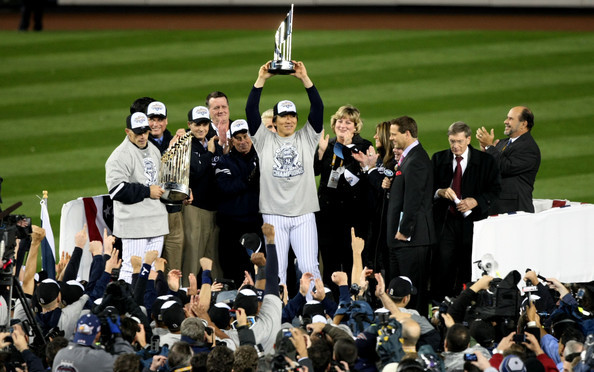
Mariano Rivera made history throughout his 19-year career and he made history again earlier this week, when he became the first ever unanimous selection to the National Baseball Hall of Fame. All 425 voters named him on their ballot. I didn’t think it would happen but it did, and it’s pretty awesome. Couldn’t pick a better player to be the first unanimous Hall of Famer.
Mike Mussina, Rivera’s teammate with the Yankees for eight years, was also voted into the Hall of Fame earlier this week. Mussina has not yet decided whether he’ll wear a Yankees hat or an Orioles hat on his Hall of Fame plaque, though he did have more wins (147 to 123), more innings (2,009.2 to 1,553), more All-Star appearances (five to zero), and more WAR (+47.8 to +35.2) with the O’s. Going in as an Oriole seems appropriate.
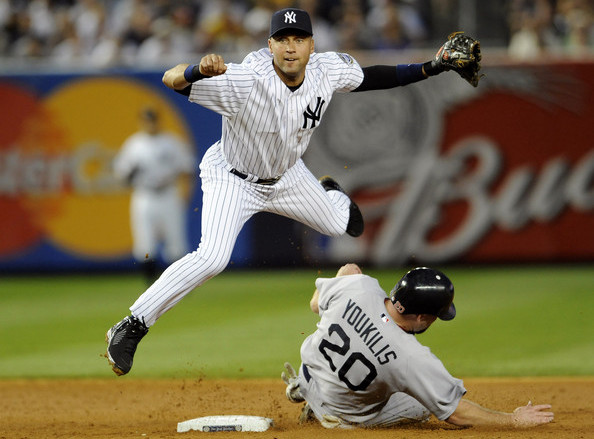
Derek Jeter joins the Hall of Fame ballot next year and, like Rivera, he is a slam dunk first ballot Hall of Famer. He might even be unanimous! That would be fun, Rivera and Jeter being the first two unanimous Hall of Famers. Either way, Jeter is getting into the Hall of Fame next year. There’s no doubt about it. After that though, it might be a while until another Yankee gets voted into Cooperstown.
Bernie Williams and Jorge Posada have already dropped off the Hall of Fame ballot, having received less than the 5% needed to remain on the ballot another year. (Williams did spend two years on the ballot. Posada dropped off in year one.) Don Mattingly exhausted his 15 years on the ballot without being voted into the Hall of Fame. I suppose one of the eras committees could vote him in a la Harold Baines. We’ll see.
We know Jeter will be the next Yankee voted into the Hall of Fame by the Baseball Writers Association of America. We don’t know who will be the next after that. Let’s go through the upcoming candidates, shall we? Here are the Yankees due to appear on the Hall of Fame ballot in the coming years.
2020 ballot
Jeter is the big name here. He’s the only slam dunk Hall of Famer joining the ball next year. Also joining the ballot are former Yankees Jason Giambi, Bobby Abreu, and Alfonso Soriano. Abreu has a stathead case for Cooperstown but, if he gets in, he’ll have a Phillies cap on his plaque. He played more games with the Phillies (1,353) than all other teams combined (1,072).
Giambi played more games with the Athletics (1,036) than the Yankees (897), plus he won an MVP and finished second in the MVP voting while with the A’s. Also, there’s the performance-enhancing drug thing. Giambi gave that vague apology for letting people down without ever saying what he did, but we all know what he was talking about. So many Hall of Fame voters are dug in against PEDs that, even if Giambi’s case were stronger than it actually is, I still don’t think he’d get in.
Soriano played more games with the Cubs (889) than the Yankees (626) but he had some of his best seasons in pinstripes. He led the league in hits (209) and homers (41) in 2002 and finished third in the Rookie of the Year voting and third in the MVP voting while with the Yankees. Soriano’s best season, his 40/40 season (46 homers and 41 steals) came with the Nationals in 2006.
I don’t think Giambi has a chance at the Hall of Fame because of the PED stuff. Abreu and Soriano strike me as Hall of Very Good players rather than Hall of Famers, and hey, there’s nothing wrong with that. They had great careers and made tons of dough. Also, we’re looking for the next Yankee Hall of Famer here, and I don’t think Giambi, Abreu, or Soriano would have a Yankees hat on his Hall of Fame plaque even if they get in. They did more with other teams.
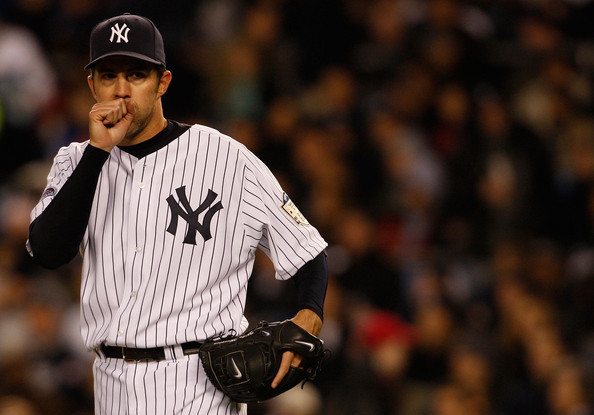
The best player with a chance to go into the Hall of Fame as a Yankee next year other than Jeter is Andy Pettitte. Pettitte was on the ballot for the first time this year and he received only 9.9% of the vote. He’s much, much closer to falling off the ballot than he is getting the 75% needed for induction into Cooperstown. It took Mussina six years on the ballot to get into the Hall of Fame. I have to think it’ll take Pettitte at least that long, if not longer to gain induction.
2021 ballot
There are no slam dunk Hall of Famers set to join the ballot in 2021, Yankees or otherwise. The best players joining the ballot are probably Tim Hudson and Mark Buehrle. The best former Yankees set to join the ballot are A.J. Burnett and Nick Swisher. Next.
2022 ballot
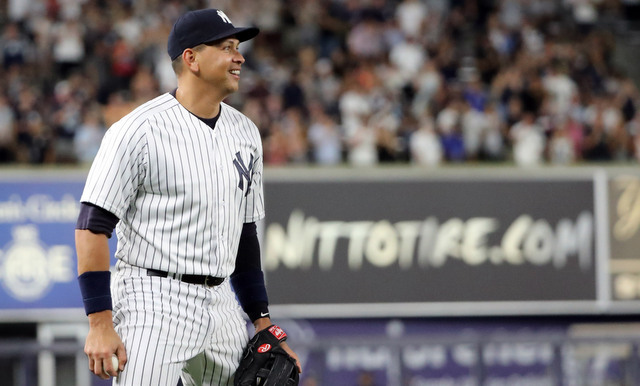
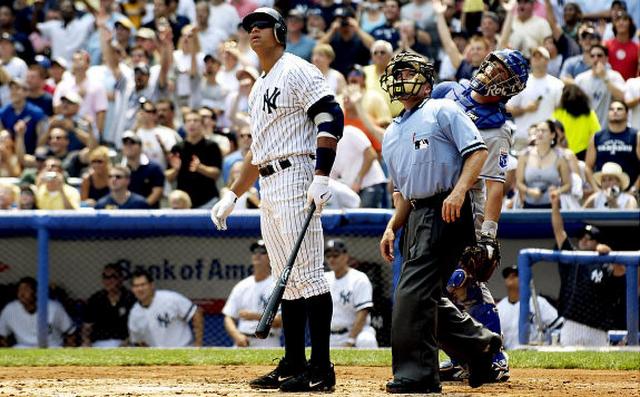
Now we’re talking. Alex Rodriguez joins the ballot in three years and his career was very obviously worthy of the Hall of Fame. There’s no arguing with the raw numbers. A-Rod is one of the 10-15 best players in the game’s history and, if you take his career at face value, he should be a unanimous selection. You can’t take his career at face value though. Rodriguez admitted to using PEDs and served a year-long suspension for a separate PED transgression.
If Barry Bonds and Rogers Clemens do not get into the Hall of Fame, A-Rod has little hope of getting in. The voting body is skewing younger and thus more forgiving of PEDs, but so many voters are dug in on this subject and will not change their minds. Jeff Passan recently spoke to voters who do not vote for Bonds or Clemens and it’s clear where they stand. Bonds and Clemens have seen their support plateau in recent years. It would take a sea change in the Hall of Fame voting for them to get in before their eligibility expires in three years.
In the unlikely event he does get voted into Cooperstown, it’s safe to assume A-Rod would go in as a Yankee. He played more games as a Yankee (1,509) than he did as a Mariner and Ranger combined (1,275), plus he won two MVPs in pinstripes and his World Series ring. More games, more homers (351 to 345), more hardware, more rings as a Yankee than everywhere else combined. Should he get in — assuming Rodriguez stays on the ballot all ten years, his final year of eligibility will be 2031, which is a looong ways away — A-Rod would go in as a Yankee.
The other notable former Yankee joining the ballot in three years is Mark Teixeira. My hunch is that, if Fred McGriff was unable to get into the Hall of Fame, Teixeira won’t get in either. Teixeira did hit 409 homers and he led the league in homers and total bases once (39 and 344 in 2009, respectively), but that’s pretty much it. Teixeira did play more games as a Yankee (958) than as a Ranger, Brave, and Angel combined (904), so if he gets into the Hall of Fame, I think he’d go in as a Yankee. I’m just not sure he’s getting in.
2023 ballot
The only serious Hall of Fame candidate joining the ballot in four years is Carlos Beltran. I think he’ll get into Cooperstown. If not on the first ballot, than eventually. Beltran is an unlikely candidate to be the next Yankee in the Hall of Fame simply because he played the bulk of his career elsewhere. Only 341 of his 2,586 career games came in pinstripes, or 13.2%. I guess Beltran would go into the Hall of Fame as a Royal or Met? Either way, it won’t be as a Yankee, so Beltran’s not the answer to our question.
2024 ballot
Players who retired following last season will be eligible for Hall of Fame induction in 2024. That means Adrian Beltre, Joe Mauer, Chase Utley, and David Wright. They combined for zero (0) games as a Yankee. Matt Holliday and Curtis Granderson could also join the Hall of Fame ballot in five years if they fail to find work this winter. Holliday spent one kinda crummy year with the Yankees. He’d go in as a Rockie or Cardinal. Granderson had some of his best seasons in pinstripes but played more games with the Tigers (674) and Mets (573) than the Yankees (513). Love the Grandyman but I don’t see him as a serious Hall of Fame candidate.
Active players
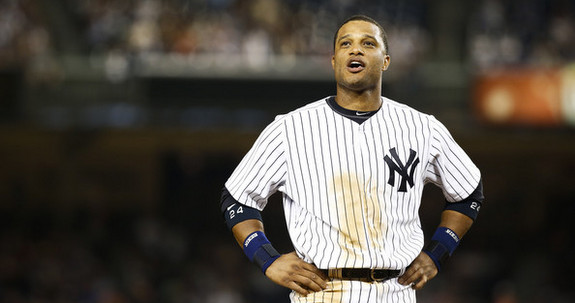
Ichiro Suzuki is a clear cut Hall of Famer and he’s going in as a Mariner, as he should. That leaves two active players who spend the bulk of their careers with the Yankees and deserve serious Hall of Fame consideration: Robinson Cano and CC Sabathia. This offseason’s trade ensures Cano would go into Cooperstown as a Yankee. He’ll split the second half of his career between (at least) two teams, meaning he won’t be able to accomplish enough with the Mariners to change his legacy from Yankees great to Mariners great.
Cano of course served a PED suspension last year, which likely ruins his chances at the Hall of Fame. Manny Ramirez has no-doubt Hall of Fame credentials, but, because he served two PED suspensions, he hasn’t topped 24% of the vote in his three years on the Hall of Fame ballot. Cano is closing in on 3,000 hits and Jeff Kent’s home run record for second basemen. Robbie’s the best second baseman of his generation. The suspension means he has a tough hill to climb.
Assuming Cano finishes out the final five years on his contract, that means he’s ten years away from appearing on the Hall of Fame ballot and 20 years away from exhausting his ten years on the ballot. We could still be talking about Robbie being on the ballot as a potential Hall of Famer in 2038! That’s an awfully long way away, man. The voting body can and will change between now and then, and a PED suspension may not be as much of a dealbreaker then as it is now. We’ll see.
Sabathia has more wins (129 to 117) and more starts (284 to 254) as a Yankee than he did as an Indian and Brewer combined, though he has slightly less WAR (+29.7 to +32.5). Also, Sabathia won his Cy Young in Cleveland and split 2008, his best individual season, between the Indians and Brewers. He won his World Series ring (and ALCS MVP) as a Yankee and has three top four finishes in the Cy Young voting in pinstripes. At some point this year he’ll record his 250th win and 3,000th strikeout, which is pretty cool.
I believe Sabathia would have a Yankees hat on his Hall of Fame plaque. The real question is whether he gets into Cooperstown. Mussina was an objectively better pitcher and he had to wait six years on the ballot to get in. Pettitte was a notch below Sabathia but he has the whole legacy Yankee thing going for him, and he didn’t come close to induction this year. (Pettitte is an admitted human growth hormone user though.) Sabathia will retire after this season and that means he’ll hit the Hall of Fame ballot in 2025. If he gets into the Hall of Fame, it’ll probably take several years on the ballot a la Mussina (and Pettitte).
Looking more long-term, Giancarlo Stanton is on a potential Hall of Fame track seeing how he’s at 300 homers and +40 WAR through his age 28 season. Five-hundred homers and +65 WAR is well within reach. Aroldis Chapman is like 60% of the way to Billy Wagner’s career at this point and Wagner hasn’t come close to induction yet, so Chapman has an uphill climb. Aaron Judge was a bit of a late-bloomer (he played his first MLB season at age 25), which puts him behind the Hall of Fame eight-ball. Gary Sanchez? Gleyber Torres? Miguel Andujar? Luis Severino? Great talents who are a long, long way from the Cooperstown combination.
What about Dellin Betances? He is the best setup man of his generation (yup) and it’s possible that, by time he’s eligible to appear on the Hall of Fame ballot, the voters may have very different standards for relief pitchers. As long as Wagner stays so far away from induction — this was Wagner’s fourth year on the ballot and he’s yet to receive even 17% of the vote — I can’t see Betances as a serious Hall of Fame candidate. Gosh, it would be fun though, wouldn’t it?
* * *
We know Jeter will be voted into the Hall of Fame next year. That is a certainty. The next Yankee to go into the Hall of Fame after Jeter is up in the air, largely because A-Rod and Cano have served PED suspensions, which significantly lowers their chances of winding up in Cooperstown. Since we’re here, we might as well turn this into a poll, so let’s get to it.